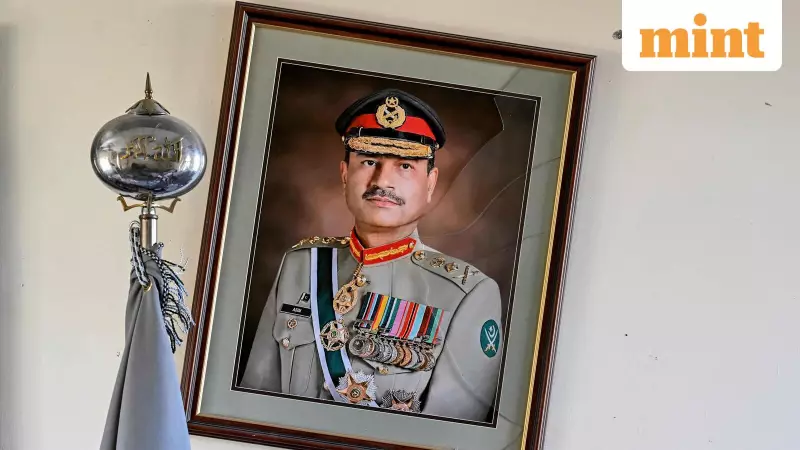
In a significant development that marks another step away from democratic norms, Pakistan has formally granted its army chief unprecedented powers through constitutional changes. Last week's amendment provides General Asim Munir with lifelong immunity from prosecution and substantially expands his authority over the nation's affairs.
The Quiet Military Takeover
Unlike traditional military coups featuring tanks on streets and mass arrests, Pakistan's power shift has been gradual and systematic. The constitutional amendment ratified recently represents the culmination of years of increasing military influence, effectively institutionalizing army control without the dramatic visuals of a standard dictatorship.
The 'establishment'—Pakistan's term for its powerful military and associated organizations—has maintained significant influence since the country's early years. However, democratic forces have typically provided counterbalance, especially after major setbacks like the loss of East Pakistan (now Bangladesh) in 1971. The current situation differs fundamentally, with civilian leaders actively facilitating military dominance.

Expanding Military Authority
The recent constitutional changes represent the third major enhancement of General Munir's power in quick succession. First, he was granted economic decision-making authority through co-chairmanship of a special investment council with Prime Minister Shehbaz Sharif. This body oversees strategically important projects, placing the military at the heart of economic planning.
Second, Munir was elevated to the rank of Field Marshal, becoming only the second person in Pakistan's history to hold this distinction—joining the country's first military dictator, Ayub Khan. Now, through the constitutional amendment, he gains additional significant powers:
- Lifelong immunity from prosecution
- Sole charge of Pakistan's nuclear weapons systems
- Elevation above leaders of other armed forces
- Fresh five-year term as Chief of Defence Forces with tenure clock reset
The reset of Munir's tenure means instead of retiring, he will serve a new five-year term in his expanded role. This creates uncertainty about whether civilian leaders would have the authority to deny him reappointment when this term concludes.
Civilian Complicity in Democratic Erosion
Prime Minister Shehbaz Sharif governs with acute awareness that his position depends on Munir's approval rather than the National Assembly's mandate. Similarly, President Asif Ali Zardari, Sharif's rival-turned-coalition partner from the Pakistan People's Party, understands his precarious position.
Both civilian leaders have surrendered hard-won democratic privileges back to the military establishment. Their motivations appear pragmatic—Zardari, having spent years in prison, likely welcomes constitutional immunity that extends to the president's office. Sharif prioritizes economic stabilization, with inflation dropping from 38% during his first year to approximately 3.6% currently, and GDP growth turning positive at 2.9% after negative territory in 2023.
The perceived threat from populist former Prime Minister Imran Khan also drives civilian-military alignment. Khan's party secured the most seats in recent elections despite his imprisonment, maintaining substantial popular support. The establishment views him as an unpredictable element after initially supporting then opposing him.
However, these practical considerations don't justify relinquishing decades of democratic progress. The current situation contrasts sharply with recent history—two decades ago, military ruler Pervez Musharraf had to adopt civilian attire and pretend to be a regular president, eventually resigning in 2008 fearing impeachment.
Subsequent army chiefs showed more restraint. Ashfaq Parvez Kayani retired when he believed his time had concluded, emphasizing that institutions should outweigh individuals. Qamar Javed Bajwa, Munir's immediate predecessor, acknowledged the army's unpopularity due to political interference and promised this would cease.

The current power consolidation succeeds precisely because it avoids overt military displays. Munir accompanies Sharif to international summits in Saudi Arabia, Beijing, and Washington, observing protocols of civilian supremacy while actual authority shifts to military hands. The courtesies of democracy remain intact while its substance diminishes.
Pakistan's fragile democratic institutions suffer damage either way—whether through power seizure or voluntary surrender by civilian leaders who should know better from historical precedent.