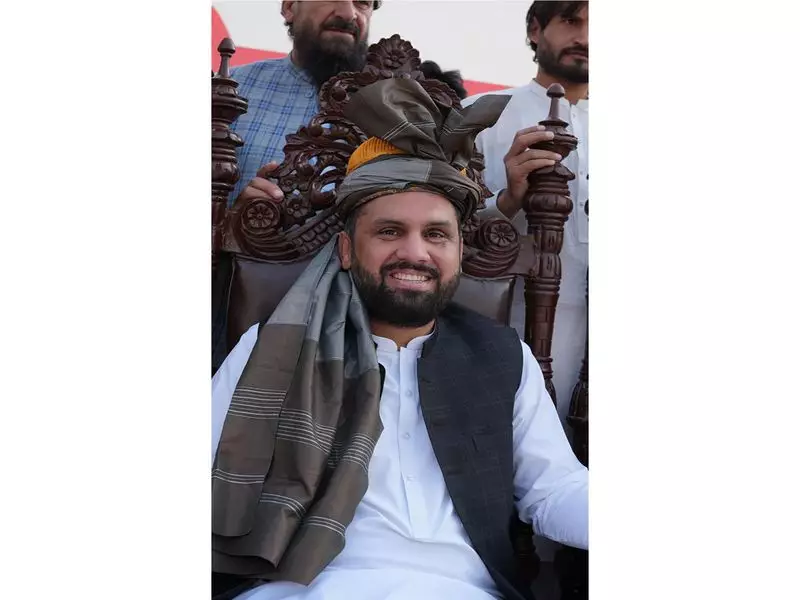
A significant political controversy has erupted in Pakistan after the Chief Minister of Khyber Pakhtunkhwa (KP), Ali Amin Gandapur, formally complained about the treatment he received during a visit to Punjab. In a strongly-worded letter addressed to his counterpart, Punjab Chief Minister Maryam Nawaz Sharif, Gandapur detailed incidents of what he termed "discourtesy" and "hostility" from the Punjab administration.
The Core Allegations: A Breach of Protocol
The heart of the dispute lies in the alleged violation of official protocol. Chief Minister Gandapur, a prominent leader of the Pakistan Tehreek-e-Insaf (PTI) party, claims that during his visit to Punjab on Thursday, April 18, 2024, he was not received by any representative of the Punjab government upon his arrival. This, according to political and bureaucratic norms in Pakistan, constitutes a serious snub to a visiting head of a provincial government.
Furthermore, Gandapur's letter escalates the complaint by stating that officials of the Punjab government displayed an attitude of "utter discourtesy and hostility." He emphasized that such behavior is not only a personal affront but also damages the inter-provincial harmony and mutual respect that should exist between federating units of the country. The KP CM made it clear that the purpose of his visit was purely related to official business concerning the welfare of the public.

Political Context and Underlying Tensions
This incident cannot be viewed in isolation from the fraught political landscape of Pakistan. Ali Amin Gandapur belongs to the PTI, the party of imprisoned former Prime Minister Imran Khan. Maryam Nawaz Sharif, on the other hand, is a senior leader of the Pakistan Muslim League-Nawaz (PML-N), which currently leads the federal coalition government. The two parties are entrenched political rivals.
The alleged mistreatment of the KP CM is seen by many analysts as a reflection of the deep-seated animosity between the central ruling alliance and the PTI, which governs the KP province. Gandapur's letter directly frames the incident as a consequence of this political rivalry, suggesting that official protocol was sidelined for partisan purposes. This charge, if proven true, points to a worrying politicization of state machinery.
Potential Repercussions and the Road Ahead
The formal letter from a sitting Chief Minister to another is a serious diplomatic move within the domestic political framework. It raises immediate questions about inter-provincial relations and the working relationship between governments of different political parties. The incident has the potential to further strain coordination on critical national issues that require provincial collaboration, such as security, economic projects, and resource management.
As of now, there has been no official public response from the office of Punjab Chief Minister Maryam Nawaz Sharif regarding the contents of the letter. The ball is now in the court of the Punjab government to either clarify its stance, offer an explanation, or defuse the situation. How this complaint is addressed will be closely watched as a test of political decorum and constitutional propriety in Pakistan's often turbulent political environment. The episode underscores the challenges of maintaining professional governance amidst intense political polarization.