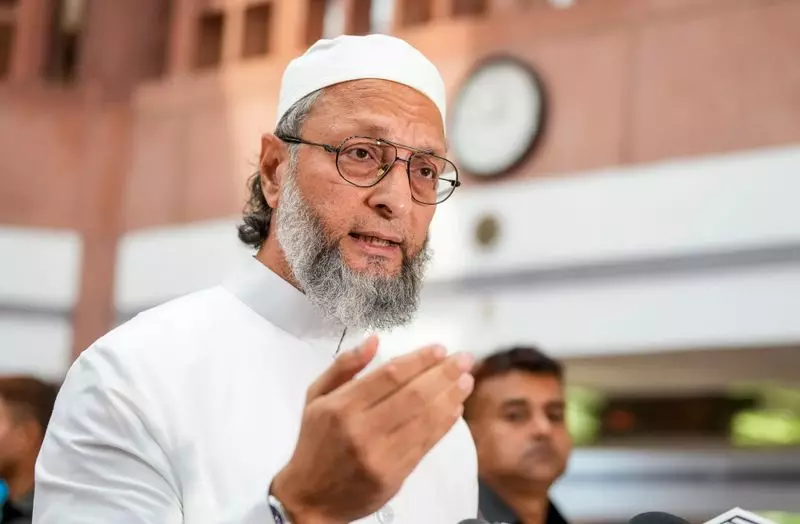
Prominent Indian politician and All India Majlis-e-Ittehadul Muslimeen (AIMIM) chief, Asaduddin Owaisi, has issued a strong condemnation following the horrific lynching of a Hindu man in Bangladesh. The victim, identified as Dipu Chandra Das, was brutally killed in a case of mob violence.
Details of the Tragic Incident
The incident occurred in the Chandpur district of Bangladesh. According to reports, Dipu Chandra Das was attacked and killed by a mob. While the precise trigger for the violence remains under investigation, the act has sent shockwaves through communities and drawn international attention to issues of minority safety and mob justice.
Owaisi, known for his vocal stance on minority rights, expressed his deep anguish over the killing. He highlighted the need for immediate and decisive action from the authorities in Dhaka to bring the perpetrators to justice.

Owaisi's Call for Justice and Government Action
In his statement, the Hyderabad MP did not mince words. He directly appealed to the administration of Prime Minister Sheikh Hasina to ensure that strong legal measures are taken against those responsible for this heinous crime.
"I strongly condemn the lynching of Dipu Chandra Das in Bangladesh," Owaisi stated. He further expressed his hope that "the Sheikh Hasina government will take strong action against the culprits." His remarks underscore a call for the rule of law to prevail over mob mentality and for the protection of all citizens, regardless of their religious background.
Broader Implications and Regional Concerns
This incident has reignited concerns about the safety of religious minorities in the region. Political leaders and human rights observers often monitor such events closely, as they can impact communal harmony and bilateral perceptions.
Owaisi's condemnation from India adds a significant cross-border dimension to the reaction. It reflects a shared concern among political figures for justice and communal peace, transcending national boundaries. The response from the Bangladeshi government and the progression of the legal case will be watched closely by advocacy groups and diplomatic circles alike.
The lynching of Dipu Chandra Das serves as a grim reminder of the dangers posed by unchecked mob violence. It poses a critical test for the institutional mechanisms in place to deliver swift justice and prevent such tragedies in the future.