Noida Airport Land Donors Await Promised Jobs as Inauguration Nears
As the Noida International Airport prepares for its grand inauguration later this month, a critical issue has surfaced, casting a shadow over the project's progress. Dozens of families who voluntarily surrendered their ancestral land for the airport's development are now grappling with the unfulfilled promise of employment for their children, a commitment made during the land acquisition process.
Broken Promises and Growing Frustration
Hansraj Singh, a farmer from Dayanatpur village, exemplifies this plight. He relinquished nearly 25 acres of fertile farmland when the government initiated land acquisition for the airport. Instead of accepting the standard cash compensation of Rs 2,100 per square meter offered in the first phase, Singh opted for what officials touted as a more secure future: guaranteed employment for a family member. Years have passed, yet that assurance remains unrealized.
"We were relocated to a rehabilitation and resettlement colony in Jewar," Singh recounted, referring to the housing built for displaced families. "My elder son works as an inspector in Delhi Police. My younger son, aged 40, holds a diploma in civil engineering from the Industrial Training Institute in Pusa and is still unemployed. We chose a job over compensation, but it seems we settled for less."

Singh's frustration is echoed by many families displaced by the airport project, which received its aerodrome licence from the Directorate General of Civil Aviation on March 6, the final regulatory clearance before flight operations can commence. According to residents and local representatives, approximately 334 families selected employment over monetary compensation during the initial two phases of land acquisition. Under the rehabilitation and resettlement plan, these families were to receive jobs directly linked to the airport project, primarily through its concessionaire, Yamuna International Airport Private Limited, overseen by Noida International Airport Limited.
"So far, those assurances have not translated into actual appointments," Singh emphasized.
Impact on Careers and Livelihoods
The airport project has necessitated vast land acquisitions across villages in the Jewar area. Authorities acquired about 1,334 hectares in the first phase and an additional 1,365 hectares in the second phase, with plans to acquire another 2,053 hectares in subsequent phases. Officials estimate that roughly 15,000 families have been displaced during the first two phases alone.
For some residents, the prolonged wait for promised employment has significantly influenced their career trajectories. Saurabh Sharma, a resident of Banwaripur village, lost nearly 10 acres of land when the project launched in 2019. At that time, he had recently completed an MTech in automobile engineering.
"They told us beneficiaries would get jobs," Sharma said. "I waited for that opportunity instead of applying elsewhere. But the job never materialized." Today, Sharma teaches at a private coaching institute, preparing students for competitive exams like NEET and JEE.
Niraj Sharma, from Rohi village, shared a similar story. His family's 10-acre land was acquired in the first phase. "I am pursuing an MSc in Mathematics from a government college. Under the rehabilitation scheme, beneficiaries were supposed to get jobs," he stated. Sharma noted that officials called several youths for interviews in September last year, but upon arrival at the airport site, they discovered the hiring was conducted by third-party vendors for contractual positions.
"I was offered a helper's job with a salary of Rs 15,000 per month, which I refused. We demanded employment directly through the concessionaire," he asserted.
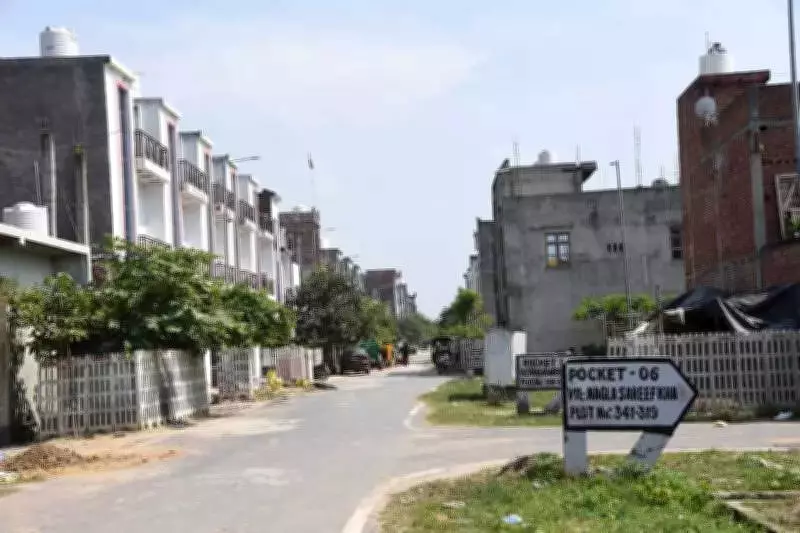
Chand Mohammad, whose seven acres were acquired in Nangla Shareef village, had a comparable experience. "I received an email for an interview last September. But when I reached the airport, I was informed the job was through a vendor and not through YIAPL," he explained. Mohammad declined an offer for a security guard position with a monthly salary of Rs 18,000.

Protests and Political Intervention
Residents have staged protests, demanding jobs linked directly to the airport operator rather than private contractors. They argue that employment through YIAPL would ensure greater job security, along with benefits such as provident fund contributions, medical insurance, and other entitlements.
Political representatives have begun pressing authorities to address the growing discontent. On Monday, Jewar MLA Dhirendra Singh met with officials of the Yamuna Expressway Industrial Development Authority to advocate for employment opportunities for eligible beneficiaries. Singh argued that providing jobs to families who surrendered land is not an act of generosity but an obligation.
"The farmers of Jewar gave their land for a project of national importance," he said. "Their children should become direct beneficiaries of this development through jobs at the airport and related industries."
The MLA highlighted that authorities had previously proposed placing affected youths with private contractors, but residents insisted on positions directly with the airport operator for enhanced stability. The Right to Fair Compensation and Transparency in Land Acquisition, Rehabilitation and Resettlement Act, 2013, mandates that governments ensure affected families receive skill training and employment opportunities or full compensation.
Official Challenges and Future Prospects
Officials acknowledge that translating promises into jobs has proven complex. According to Yamuna Authority CEO RK Singh, many applicants currently lack the specialised skills required for aviation-sector roles. "Jobs such as pilots or cabin crew require specific qualifications," the official noted, adding that authorities are exploring positions like ground staff and other operational roles that align with the educational backgrounds of displaced youths.
For families like Hansraj Singh's, however, debates over qualifications offer little solace. "We gave our land, which was our main livelihood, because we believed what we were told," he lamented. "Now the airport is ready, but the promise made to us is still waiting."