

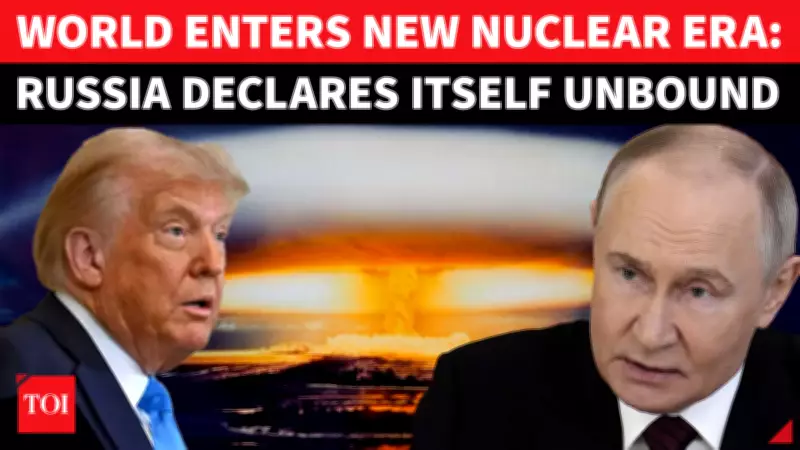
New START Nuclear Treaty Officially Expires, Russia Issues Stark Warning
The world has entered a precarious new phase in nuclear arms control as the last remaining treaty limiting strategic offensive weapons between the United States and Russia, known as New START, has officially expired. This development, confirmed on February 5, 2026, leaves the two nuclear superpowers without a formal framework to regulate their vast arsenals for the first time in decades, pushing global security into uncharted and potentially dangerous territory.
Moscow's Position and the Lack of US Response
According to statements from Moscow, the Russian government asserts that Washington never formally responded to its proposals to extend the New START treaty beyond its expiration date. Consequently, Russia now assumes that both nations are no longer bound by any obligations previously outlined in the agreement. This stance effectively removes the legal constraints that had governed the number of deployed strategic nuclear warheads, delivery systems, and provided for verification through on-site inspections.
The Kremlin has outlined that Russia will now shape its strategic offensive weapons policy based primarily on two factors: the military actions of the United States and the broader, evolving international security environment. While Russian officials have indicated that diplomacy remains a possible avenue, they emphasize that any restraint in nuclear arms development is now entirely voluntary rather than legally enforced by treaty provisions.

Immediate Consequences and Global Apprehension
The expiration of New START brings immediate and tangible consequences. All inspection activities under the treaty have halted, and the numerical limits on nuclear weapons are no longer in effect. This situation has rapidly intensified global fears of a renewed nuclear arms race, reminiscent of Cold War tensions. Experts and international observers warn that without the transparency and predictability offered by the treaty, misunderstandings or miscalculations could escalate, increasing the risk of nuclear confrontation.
The silence from the United States government regarding the treaty's expiration and Russia's statements has added to the uncertainty. The lack of a formal US response or a clear public stance has left allies and the international community seeking clarity on America's future nuclear posture and arms control strategy.
The Broader Geopolitical Context
This development occurs against a backdrop of already strained relations between Russia and the West, encompassing conflicts in Ukraine and broader geopolitical competition. The expiration of New START is seen not just as a bilateral issue but as a significant blow to the global nuclear non-proliferation regime. It raises urgent questions about the future of arms control, the potential for a new era of nuclear competition, and the challenges of maintaining strategic stability in an increasingly multipolar and tense world.
As the treaty era ends, the international community watches anxiously, hoping for renewed diplomatic engagement to prevent a destabilizing and costly arms buildup that could threaten global security for generations to come.






