

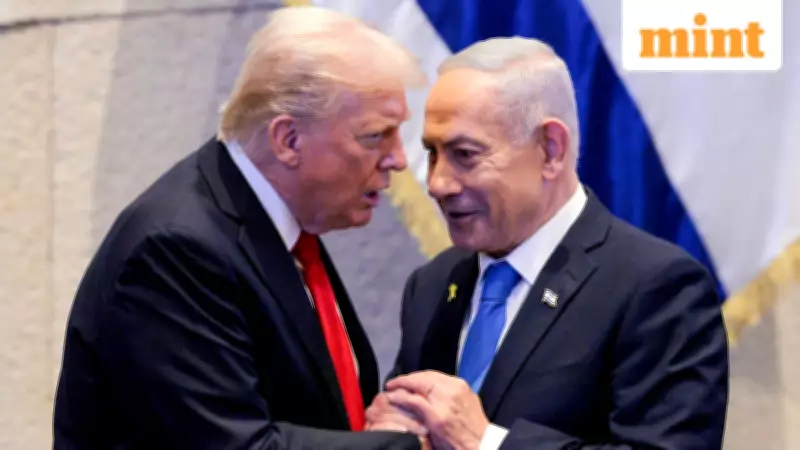
Netanyahu to Meet Trump in Washington as Iran-US Talks Progress
Israeli Prime Minister Benjamin Netanyahu is scheduled to meet with US President Donald Trump in Washington on Wednesday, February 11, 2026, for critical discussions regarding the ongoing negotiations between the United States and Iran. This high-stakes meeting marks the sixth encounter between the two leaders since Trump assumed office a year ago, underscoring the urgency of the Iran issue on the global diplomatic stage.
Background: 'Very Good' Initial Talks in Oman
President Trump confirmed that Washington and Tehran will hold further talks following what he described as "very good" initial discussions held in Oman on Friday, February 6, 2026. These negotiations, mediated by Oman, represented the first direct engagement between the two nations since the US and Israel conducted military strikes against Iran in the summer of 2025. Delegations from both countries participated, with Omani Foreign Minister Badr Albusaidi facilitating the indirect dialogue.
Trump expressed optimism about the prospects, stating, "Iran looks like it wants to make a deal very badly. We have to see what that deal is." He announced that another round of talks would occur "early next week," although Iranian Foreign Minister Abbas Araghchi later clarified that no specific date had been finalized.

Israeli Stance: Netanyahu's Demands on Iran
The Israeli government, in a statement released on Saturday, February 7, outlined Prime Minister Netanyahu's firm position. Netanyahu "believes any negotiations must include limitations on ballistic missiles and a halting of the support for the Iranian axis," referring to Iran's regional allies such as Hezbollah and Houthi rebels. This stance highlights Israel's primary security concerns, which extend beyond Iran's nuclear program to encompass its broader military and geopolitical influence in the Middle East.
Iran's Position: Strictly Nuclear Focus
In contrast, Iran has asserted that the discussions are strictly limited to its nuclear program. Foreign Minister Araghchi emphasized to Al Jazeera that no talks were held on ballistic missiles or regional proxies. He stated, "We are prepared to reach an agreement that assures them that enrichment in Iran will be peaceful," while firmly rejecting any complete halt to uranium enrichment. This position aligns with Iran's long-standing demand for the lifting of US sanctions in exchange for enhanced monitoring and verification measures to ensure the peaceful nature of its nuclear activities.
Key Players and Dynamics of the Oman Talks
The negotiations in Oman involved Iranian Foreign Minister Abbas Araghchi and US envoy Steve Witkoff, with Trump's son-in-law and senior advisor Jared Kushner also participating. Although formally indirect, Araghchi revealed that he had direct contact with the US delegation, including an exchange of handshakes, indicating a thaw in diplomatic relations. Both sides agreed in principle to continue discussions after consulting their respective capitals, setting the stage for future engagements.
Diverging Objectives: What Iran and the US Seek
Iran has offered to accept rigorous monitoring and inspections to verify that its nuclear program remains non-weaponized, in return for the removal of US sanctions. However, Washington and its allies have consistently rejected Iran's insistence on continuing uranium enrichment, viewing it as a potential pathway to developing nuclear weapons. This fundamental disagreement remains a significant hurdle in achieving a comprehensive agreement.
Military Posturing Amid Diplomacy
Despite the productive tone of the talks, President Trump noted on Friday that a "big fleet" was en route to Iran and would arrive soon, as reported by CNN. This military movement underscores the complex interplay of diplomacy and deterrence characterizing the US-Iran relationship, with both sides navigating a delicate balance between negotiation and strategic pressure.

As Netanyahu and Trump prepare for their Washington meeting, the international community watches closely. The outcome of their discussions could significantly influence the trajectory of the Iran-US talks, with implications for regional stability, nuclear non-proliferation, and global security dynamics. The meeting is poised to address critical questions about the scope of negotiations, the feasibility of compromises, and the potential for a renewed diplomatic framework in the Middle East.





