

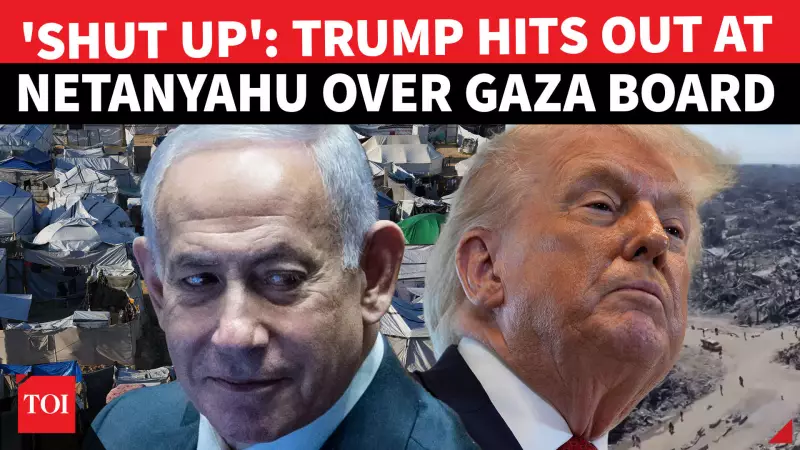
Netanyahu Stands Firm Against US Gaza Proposal
Israeli Prime Minister Benjamin Netanyahu has openly opposed a new United States plan for governing Gaza after the conflict. He made his position clear in a public statement, drawing firm red lines against certain aspects of the American blueprint.
Rejection of Foreign Forces in Gaza
Netanyahu specifically rejected the proposed presence of Turkish and Qatari forces in Gaza. He stated that Israel cannot accept troops from these countries operating in the territory. This stance puts him at odds with the US Peace Board's recommendations for post-war security arrangements.
The Peace Board, recently unveiled by President Donald Trump, includes numerous global power brokers and influential figures. Its recommendations for Gaza's future have already created friction between Washington and Jerusalem, despite the long-standing alliance between the two nations.

Insisting on Strong Trump Relationship
Even while opposing the US plan, Netanyahu emphasized that his personal relationship with President Trump remains strong and unshaken. He described Trump as "still a friend" despite their differences on this particular issue. This public affirmation comes at a time when diplomatic tensions are rising over Gaza's future governance.
Behind closed doors, officials report significant disagreements emerging between Israeli and American negotiators. The US Peace Board's comprehensive approach to Gaza reconstruction and administration conflicts with Israel's security priorities and strategic interests in the region.
Multiple Points of Contention
The disagreement extends beyond just military presence to several key areas:
- Ceasefire monitoring mechanisms and international oversight
- The composition and authority of post-war governing bodies
- Reconstruction funding sources and distribution channels
- Long-term security arrangements for Gaza's borders
As these discussions continue, the battle over who will control Gaza's future is intensifying. What began as post-war planning has transformed into a significant geopolitical confrontation with implications extending far beyond the Middle East.
Regional analysts note that this dispute tests the resilience of the US-Israel alliance during a particularly volatile period. Both nations face pressure from domestic constituencies while navigating complex international diplomacy around one of the world's most persistent conflicts.






