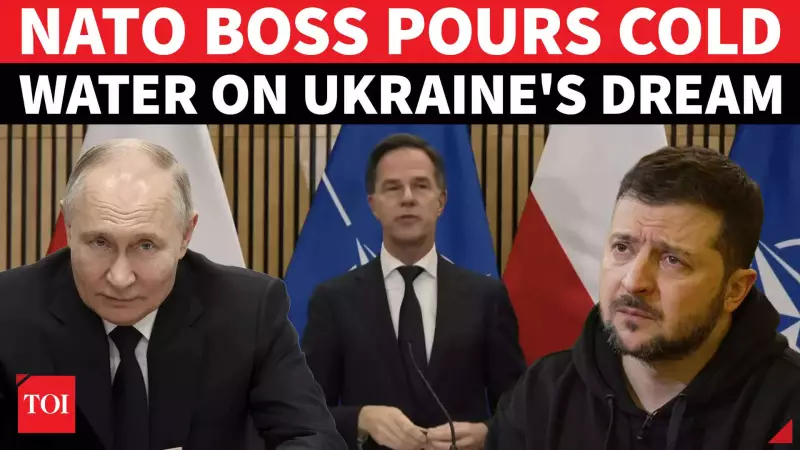
In a statement that clarifies the Western military alliance's current stance, NATO Secretary General Mark Rutte has declared that Ukraine's membership into the bloc is effectively blocked for the foreseeable future. This significant declaration was made during his visit to Poland, directly addressing one of Kyiv's key strategic goals since the onset of the conflict with Russia.
A Clear Message on NATO Membership
Mark Rutte stated plainly that "for practical reasons, NATO is not possible now" for Ukraine. He attributed this major obstacle to a lack of unanimous support among the alliance's existing member states. Rutte specifically named Hungary, the United States, and Slovakia as countries where consensus is currently absent. This admission comes at a critical juncture, as behind-the-scenes discussions about a potential peace deal with Russia gain momentum, forcing a strategic pivot towards securing alternative arrangements for Kyiv's defence.
The Three-Layered Security Alternative
With the traditional NATO membership path under Article 5 collective defence seemingly closed, Rutte outlined a novel, multi-tiered framework for ensuring Ukraine's security. This proposed model consists of three core components:

- Ukraine's Own Armed Forces: Continuously strengthening and modernising Ukraine's military with sustained international support to act as the first line of defence.
- A European-Led Multinational Force: The creation of a coalition, potentially spearheaded by key EU nations, to provide a direct security presence and guarantees.
- U.S.-Backed Bilateral Guarantees: Security assurances provided directly by the United States and other allies, operating outside the formal NATO treaty framework but offering significant deterrence.
Implications for Peace Talks and Regional Stability
This strategic shift by NATO leadership arrives as ceasefire negotiations appear on the horizon. The alliance's explicit statement regarding Ukraine's membership prospects is likely to influence the dynamics of these talks, setting new parameters for what long-term security for Eastern Europe might entail. The focus is now squarely on crafting a viable, post-conflict security architecture for Ukraine that does not rely on NATO membership. This moment represents a pivotal test for the West's ability to redefine its commitments and maintain stability in a region still under threat.
Rutte's comments also included pointed remarks about the political landscape in key ally nations, indirectly referencing the uncertainty surrounding future U.S. policy under a potential Donald Trump administration and the consistent opposition from Hungary's Viktor Orban. The path forward for Ukraine now hinges on the success of this alternative security plan and the ongoing, fragile diplomatic efforts to end the war.