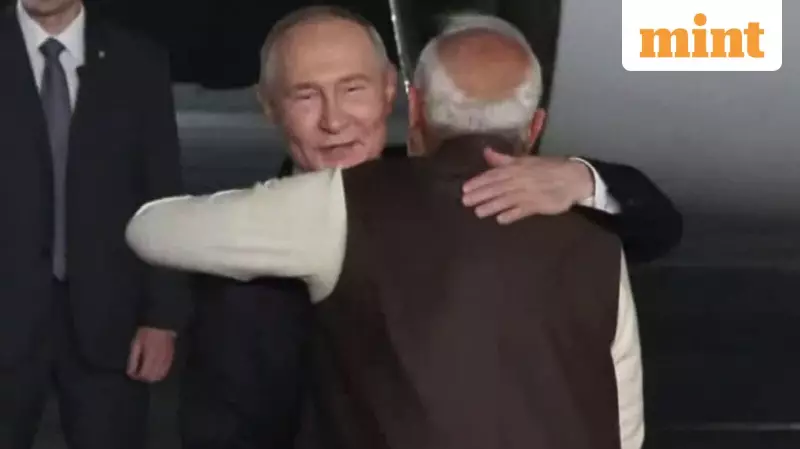
Prime Minister Narendra Modi's decision to personally welcome Russian President Vladimir Putin at the airport, breaking standard protocol, has sent a powerful message on the world stage. The visit, occurring amidst a renewed US push for peace in Ukraine, has drawn intense global scrutiny and unease from several Western nations.
The Global Discomfort: A Double Standard?
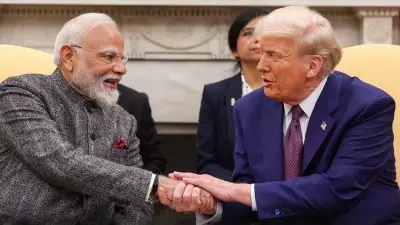
The scale of the welcome extended to President Putin in New Delhi has unsettled many countries, particularly in the West. These nations view Russia's actions in Ukraine as a clear violation of sovereignty. However, the article questions this discomfort by highlighting a recent precedent: US President Donald Trump rolled out the red carpet for Putin in Alaska in August 2025. This raises the point of a perceived double standard, especially as many Western countries continue their own trade with Russia while objecting to India's commercial ties with Moscow.
Despite President Trump's repeated claims of being able to resolve the Russia-Ukraine conflict swiftly, the war threatens to enter its fifth year. His reported good relations with Putin have so far not translated into a peace deal, a fact noted as a significant setback for the US administration.

India's Strategic Calculus: Why Russia Remains Key
For India, the visit was a firm assertion of its independent foreign policy. As the world's most populous nation and the fifth-largest economy, India aspires to be a key pole in a multipolar world and cannot simply follow diktats from Washington or elsewhere.
The partnership with Russia is rooted in decades of reliability. Russia is a permanent member of the UN Security Council and the source of much of India's defence equipment, despite diversification efforts. A critical example is the S-400 missile defence system, which was used to counter threats from Pakistan. Given India's strategic challenges, including an assertive China, maintaining strong ties with Moscow is seen as imperative.
Beyond the optics, the visit yielded concrete agreements:
- A mobility pact for Indian blue-collar workers to seek employment in Russia.
- A naval training agreement for Indian sailors on the Arctic route, a new strategic corridor opening due to melting ice.
- A defence manufacturing deal to jointly produce spare parts for Russian-origin equipment in India under the Make-in-India programme, including for export to third countries.
The Broader Geopolitical Canvas
Putin's visit to India nearly coincided with French President Emmanuel Macron's trip to China, reflecting a shifting global landscape. With Trump in the White House, European leaders are increasingly engaging with Beijing, which champions multipolarity.
Meanwhile, in a related development, Indian diplomacy showed nuance in Bangladesh. Prime Minister Modi expressed concern for ailing former Bangladeshi Prime Minister Begum Khaleda Zia, whose party, the BNP, is now a favourite in upcoming polls. This message, well-received by the BNP, hints at a potential recalibration of India's engagement in Dhaka, traditionally warmer with Sheikh Hasina.
In essence, Modi's embrace of Putin was more than a ceremonial gesture. It was a strategic move underscoring India's autonomous path, securing tangible benefits, and navigating the complex currents of a world where old alliances are being tested and new equations are forming.