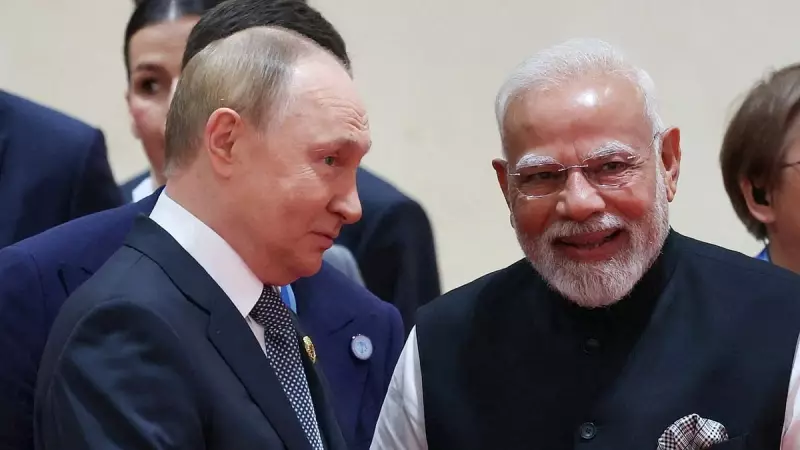
Russian President Vladimir Putin is set to arrive in New Delhi on Thursday for a crucial two-day visit that promises to significantly strengthen the strategic partnership between India and Russia. The highlight of his visit will be the 23rd annual India-Russia summit with Prime Minister Narendra Modi, where nuclear energy cooperation is expected to dominate discussions.
Expanding Nuclear Partnership Beyond Existing Projects
The two leaders are prepared to take their nuclear energy collaboration to new heights, moving beyond the established Kudankulam Nuclear Power Plant project. Discussions will focus on comprehensive fuel cycle cooperation and the potential construction of Small Modular Reactors (SMRs) across India.
This expansion represents a significant milestone in the bilateral relationship, demonstrating Russia's commitment to supporting India's growing energy needs and clean energy transition. The talks come at a time when India is actively diversifying its energy mix and reducing its carbon footprint.

Comprehensive Diplomatic Engagement Planned
Apart from his crucial meeting with Prime Minister Modi, President Putin will also call on President Droupadi Murmu during his packed itinerary. The diplomatic engagements underscore the importance both nations place on their longstanding relationship, which has weathered numerous global geopolitical shifts.
The annual summit, happening on Thursday, marks the continuation of a tradition that has consistently produced meaningful outcomes for both nations. This year's meeting is particularly significant as it addresses emerging global energy challenges and opportunities for technological collaboration.
Strategic Implications and Future Cooperation
The discussion on Small Modular Reactors represents a forward-looking approach to nuclear energy. Small Modular Reactors offer several advantages including lower initial capital investment, enhanced safety features, and flexibility in deployment locations. This could potentially revolutionize India's nuclear energy landscape beyond large-scale plants like Kudankulam.
Fuel cycle cooperation indicates a deeper level of trust and technological sharing between the two nations. This comprehensive approach covers the entire nuclear energy process from fuel supply to waste management, ensuring sustainable and self-reliant nuclear power generation for India.
The outcomes of this summit are expected to have long-term implications for India's energy security and technological advancement in the nuclear sector. As both leaders sit down for discussions, the world will be watching how this important partnership evolves to meet contemporary energy and strategic challenges.