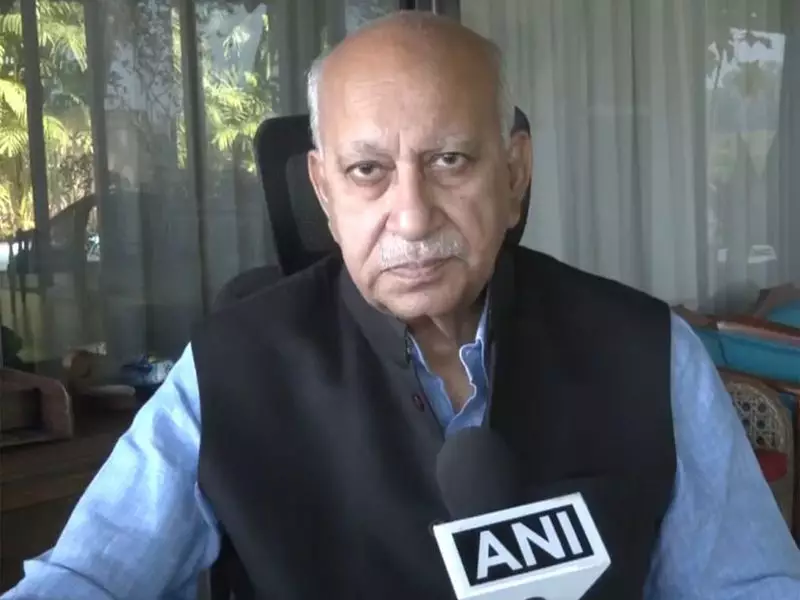
Former Minister of State for External Affairs, MJ Akbar, has launched a sharp critique against the current political regime in Bangladesh. He alleges that the government's ideology has actively abetted an environment of hatred towards the Hindu minority, directly contributing to a series of brutal lynching cases.
Ideological Complicity in Targeted Violence
In a powerful statement, Akbar did not mince words. He asserted that the recent attacks on Hindus in Bangladesh are not random acts of violence. Instead, he claims they are the direct result of a state-sponsored ideology that fosters religious intolerance. The former diplomat and journalist linked the safety of minorities directly to the political climate, suggesting that the current administration's stance has emboldened extremist elements.
Akbar's comments bring into sharp focus the plight of the Hindu community in Bangladesh, which has faced escalating violence in recent years. Incidents of mob attacks, temple vandalism, and land grabbing have been widely reported, creating an atmosphere of fear and insecurity. His intervention points a finger at the highest levels of authority for failing to protect its citizens and, worse, for creating a permissive environment for such crimes.
A Call for National Introspection
The veteran journalist emphasized that this issue transcends bilateral relations between India and Bangladesh. He framed it as a fundamental crisis of conscience for Bangladesh as a nation. Akbar called for deep introspection within Bangladeshi society and its leadership, urging them to confront the ideology that permits such brutality against a religious minority.
His remarks underscore a growing concern among observers about the shrinking space for religious minorities in the region. By explicitly naming the "current regime" as a facilitator of hatred, Akbar has elevated the discourse from isolated criminal acts to a systemic political problem. This accusation challenges the Bangladesh government's narrative of secularism and communal harmony.
Broader Implications for Minority Rights
The lynching cases in Bangladesh have drawn condemnation from international human rights organizations. Akbar's statement adds a significant political dimension to this criticism. It highlights how majoritarian ideologies, when endorsed or ignored by those in power, can lead to severe human rights violations.
The former minister's analysis suggests that ensuring minority safety requires more than just law enforcement. It demands a decisive political will to counter hateful narratives and uphold constitutional values of equality. His comments serve as a stark reminder that the protection of minority communities is a key indicator of a healthy democracy.
As the debate continues, Akbar's forceful critique puts pressure on the Bangladesh government to address not just the symptoms but the root cause of the violence. The world watches to see if this leads to concrete actions to protect Hindu minorities and hold perpetrators accountable, or if the climate of hatred persists under the current regime's watch.