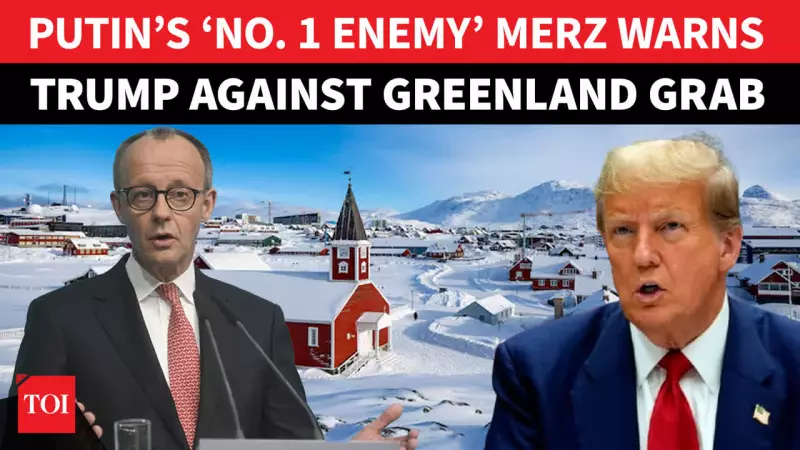
German Chancellor Friedrich Merz issued a strong warning about potential economic fallout from the United States. He addressed recent tariff threats made by U.S. President Donald Trump concerning Greenland. Merz spoke clearly during a press conference in Berlin on Tuesday.
Merz Says Tariffs Will Harm American Consumers First
Friedrich Merz explained that any new tariffs linked to Greenland would backfire. He stated American consumers would pay the initial price. The German leader emphasized these measures would also damage European economies significantly. Germany's export-driven economy faces particular risks from such trade actions.
Europe Seeks Negotiations But Prepares Response
Merz stressed Europe's strong preference for diplomatic solutions. He said the European Union wants to avoid escalating tensions into a full trade dispute. However, the chancellor made Europe's position unmistakably clear. The EU stands ready to implement countermeasures if necessary.

The German chancellor reaffirmed Europe's commitment to negotiation and unity. He highlighted the importance of maintaining stability across the Atlantic alliance. This comes amid growing strategic competition in the Arctic region.
Solidarity With Denmark and Greenland Underlined
Merz expressed firm solidarity with both Denmark and Greenland during his remarks. He underlined fundamental principles of sovereignty and territorial integrity. These principles form the bedrock of the NATO alliance according to the chancellor.
The German leader connected trade policy directly to alliance cohesion. He warned that tariff threats could weaken transatlantic relations instead of strengthening them. Merz emphasized Europe's desire to keep the NATO alliance strong despite current challenges.
Broader Context of Arctic Tensions
This exchange occurs against a backdrop of increasing Arctic tensions. Several NATO nations have expressed concerns about strategic competition in the region. Greenland's geographic position makes it particularly significant for Arctic security discussions.
European leaders have consistently advocated for diplomatic approaches to Arctic issues. Merz's comments reflect this broader European strategy. He positioned Europe as seeking dialogue while maintaining preparedness for other scenarios.
The chancellor's warning represents the sixth NATO country to voice concerns publicly. Multiple alliance members have questioned the wisdom of tariff threats connected to Greenland. European unity appears strong on this particular issue according to diplomatic observers.