

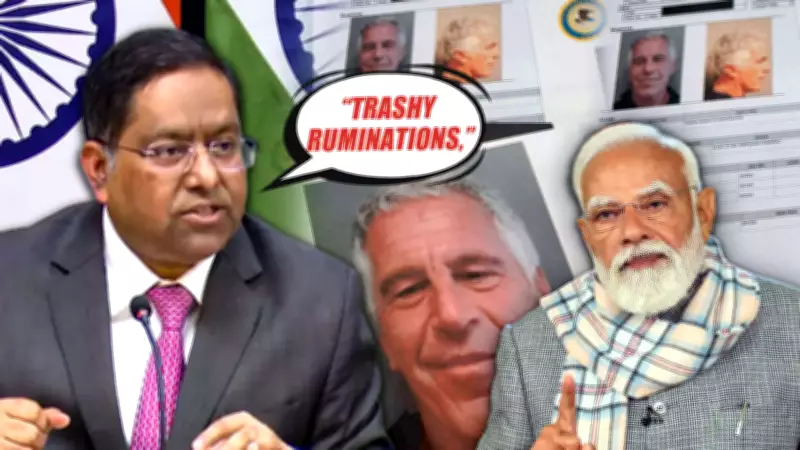
MEA Firmly Rejects Epstein Documents References to Prime Minister Modi
The Ministry of External Affairs (MEA) has issued a strong rebuttal against references to Prime Minister Narendra Modi appearing in the controversial Epstein files, labeling them as completely baseless and without factual foundation. In an official statement released on Friday, MEA spokesperson Randhir Jaiswal addressed the matter directly, emphasizing that such allegations deserve outright dismissal from public discourse.
Official Clarification on Israel Visit
Jaiswal provided specific clarification regarding Prime Minister Modi's visit to Israel in July 2017, confirming that this constituted legitimate diplomatic engagement as part of India's official foreign policy work. The MEA spokesperson characterized the remaining content in the email references as "trashy ruminations by a convicted criminal" that should not be afforded any credibility or serious consideration.
Government's Strong Stance Against Unverified Claims
The Ministry has taken a firm position against what it describes as unsubstantiated allegations circulating in certain media circles. The official statement urges both citizens and media organizations to exercise extreme caution when encountering such claims, highlighting their lack of verifiable evidence and questionable origins. This response reinforces the government's consistent approach to protecting the integrity of India's diplomatic engagements and leadership reputation.

Broader Implications for Diplomatic Discourse
This development occurs within the broader context of maintaining transparent and factual public discourse about India's international relations. The MEA's prompt response demonstrates the government's commitment to addressing misinformation swiftly and authoritatively, particularly when it involves the nation's highest leadership and diplomatic initiatives. The statement serves as a reminder of the importance of verifying sources before amplifying potentially damaging allegations in the public sphere.
The Ministry's comprehensive dismissal of these references underscores India's position that such unverified claims have no place in serious discussions about the country's foreign policy or leadership activities. This incident highlights the ongoing challenges governments face in navigating information ecosystems where unsubstantiated allegations can gain temporary traction before being properly examined and refuted by official channels.






