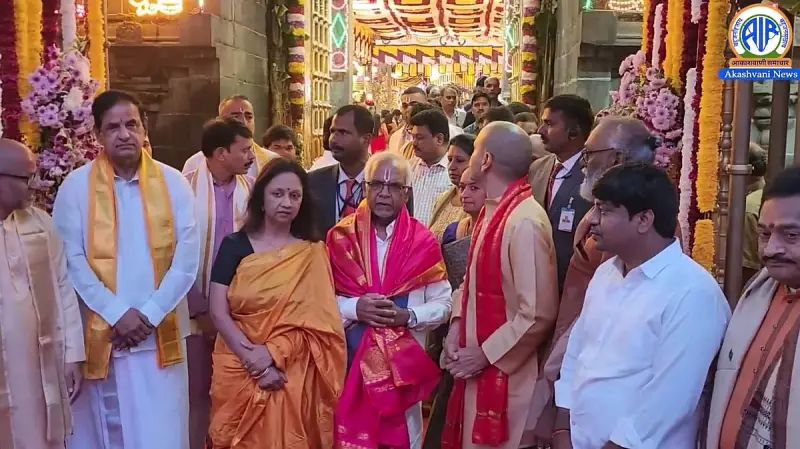
In a significant spiritual and cultural development, the President of Mauritius, Dharambeer Gokhool, undertook a pilgrimage to the sacred Tirumala Sri Venkateswara Swamy Temple. This visit, which took place in the early hours of Wednesday, January 7, 2026, has paved the way for a new initiative to promote Vedic studies in the island nation.
Presidential Pilgrimage to the Holy Shrine
President Dharambeer Gokhool, accompanied by his wife, arrived at the renowned hill shrine of Lord Venkateswara to offer his prayers. The visit underscores the deep-rooted cultural and religious connections between India and Mauritius, a country with a significant Hindu population. The President's presence at one of the world's most visited religious sites highlights the enduring spiritual bonds.
The visit was officially noted on social media by All India Radio News, confirming the President's prayers at the temple on January 7, 2026. Such high-profile visits often carry diplomatic weight, reinforcing soft power ties and shared heritage.

Announcement of a New Vedic School in Mauritius
The core outcome of this visit extends beyond the pilgrimage. It has been announced that a Vedic school will be established at a temple in Mauritius. This educational institution will receive direct guidance and support from the Tirumala Tirupati Devasthanams (TTD), the autonomous body managing the Tirumala temple.
This collaboration is a major step in preserving and propagating Vedic knowledge and Sanskrit studies outside India. The TTD, with its vast experience in managing religious education and rituals, will provide the necessary expertise to structure the curriculum and training methodologies for the new school.
Strengthening Cultural and Educational Ties
The establishment of the Vedic school represents a concrete effort to strengthen the cultural diaspora. For Mauritius, it means institutionalizing access to traditional Vedic education. For India and the TTD, it is an opportunity to expand its spiritual and educational outreach globally.
This initiative is expected to serve the Hindu community in Mauritius and potentially attract students from other Indian diaspora communities in the region. It aligns with broader efforts to connect the global Hindu community with its religious and philosophical roots in India.
The partnership between the Mauritian temple authorities and the TTD is a model for future collaborations, where ancient knowledge systems are shared and nurtured across borders. It stands as a testament to the role of faith and education in building international bridges.