In a stunning turn of events that has redrawn the geopolitical map, Venezuelan President Nicolás Maduro was arrested by United States forces following a series of targeted airstrikes. This dramatic intervention came less than a day after Maduro hosted a high-level Chinese delegation, showcasing the intense global power struggle now playing out in Latin America.
A Final Diplomatic Gesture Before the Storm
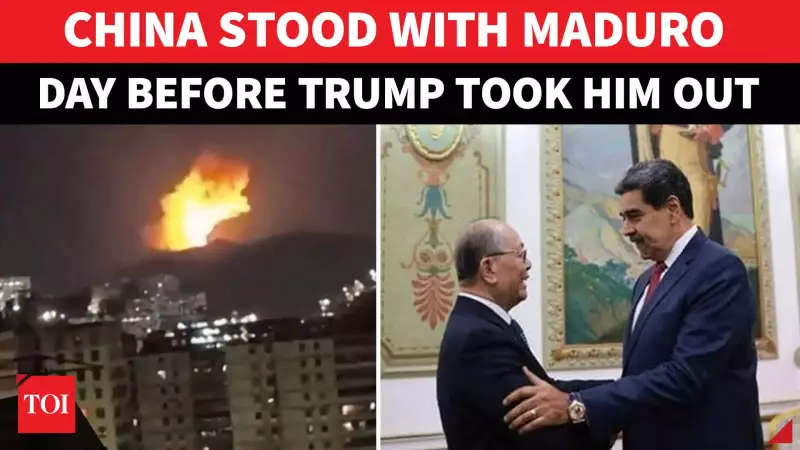
On a fateful Friday, with the political ground already shifting beneath him, Nicolás Maduro welcomed China's top envoy to the presidential palace in Caracas. This meeting, now believed to be his final official act as Venezuela's leader, was filled with declarations of a "perfect union" between the two nations. Both sides championed a new, multipolar world order designed to counterbalance traditional U.S. influence.
The warm rhetoric and show of solidarity from Beijing provided a stark contrast to the gathering storm. For years, Venezuela has been a key ally for both China and Russia in the Western Hemisphere, receiving significant economic and political support as it faced crippling sanctions from Washington and its allies.

The Sudden U.S. Military Escalation
The diplomatic calm was shattered in less than 24 hours. The United States launched coordinated military strikes across Venezuela. Explosions illuminated the night sky over the capital, Caracas, marking a sudden and violent escalation. Following the aerial assault, U.S. personnel successfully located and detained President Maduro.
Secretary of State Marco Rubio soon made a definitive announcement, declaring that Nicolás Maduro is no longer the president of Venezuela, thereby formally ending his controversial rule. The U.S. administration has justified its unprecedented actions by citing long-standing allegations of state-sponsored drug trafficking and asserting that the Maduro regime posed a direct threat to regional security and stability.
Global Repercussions and a New Power Alignment
The removal of Maduro has instantly triggered a major international crisis. Both China and Russia have swiftly voiced strong support for Caracas, condemning the U.S. intervention as a blatant violation of international law and Venezuelan sovereignty. This sharp divide raises urgent and critical questions about a potential global realignment of power.
The event signals a new, more confrontational chapter in international relations, where competition between major powers is increasingly played out in third countries. For Latin America, the implications are profound, setting a controversial precedent for foreign intervention in the region. The world now watches to see how this bold American move will reshape alliances, influence energy markets, and affect the future of democracy and sovereignty in the hemisphere.
The rapid sequence of events—from a high-level strategic meeting with a key U.S. rival to military capture—underscores the volatile nature of modern geopolitics. The aftermath will likely involve intense diplomatic wrangling at the United Nations, potential economic repercussions, and a uncertain path forward for the Venezuelan people.