The dramatic capture of Venezuelan President Nicolas Maduro by United States forces has sent geopolitical shockwaves far beyond Latin America, landing squarely in Beijing. The event, a bold display of unilateral American power, directly threatens China's substantial economic and political investments in Venezuela, its largest external partner in the region, and raises profound questions about the future balance of power, particularly concerning Taiwan.
China's Venezuelan Gambit: Billions in Oil and Influence at Risk
For nearly two decades, since the era of Hugo Chavez, China has meticulously cultivated Caracas as a strategic partner. This relationship transformed from a simple oil-for-goods trade into a deep political and economic alliance, allowing Beijing to expand its influence in America's traditional backyard. China is Venezuela's largest external economic partner, with trade dominated by Venezuelan crude oil in exchange for Chinese machinery, electronics, and consumer goods, often structured through "loans-for-oil" deals.
Data from Trading Economics shows China exported goods worth $4.8 billion to Venezuela in 2024. The oil flow back to China, however, is murkier due to US sanctions, often shipped via tankers from third countries like Malaysia or Panama. The partnership diversified into Venezuela's gold, rare earths, and other minerals. Now, with Maduro's removal, this carefully built edifice is in jeopardy. Trade experts estimate Venezuela owes China over $19 billion from these oil-for-cash arrangements, a debt whose recovery now looks uncertain.

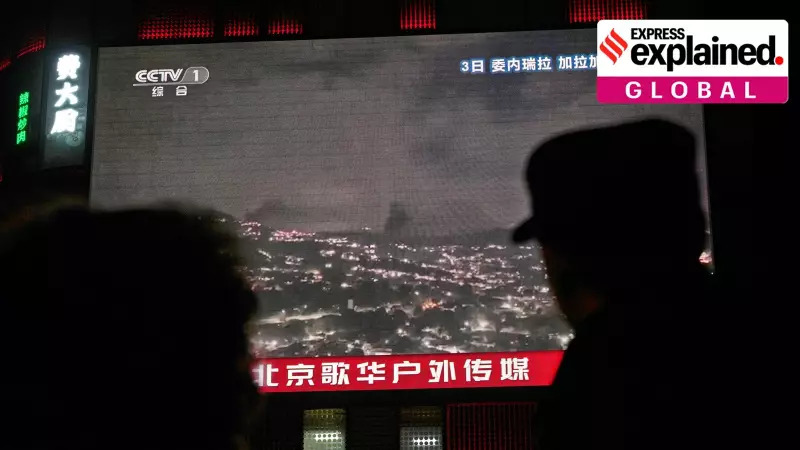
Following the raid in Caracas on January 3, Beijing has reportedly asked its major lenders to review their exposure to Venezuela. Chinese companies operating across Latin America are bracing for heightened uncertainty as Washington reasserts dominance. Chinese academics perceive a Trump-style revival of the Monroe Doctrine, aimed squarely at countering China's growing footprint in the Americas, which includes strategic investments in ports, energy, and minerals.
The Taiwan Calculus: Deterrence or Provocation?
The more significant strategic question emerging from the Venezuela operation is its potential impact on the Taiwan Strait. On one hand, the US action sets a precedent for unilateral military intervention to protect national interests, which China could theoretically cite to justify a move on Taiwan. Similarly, Russia could reference it regarding Ukraine. The audacious night-time capture of a sitting head of state from his bedroom demonstrates a willingness to act decisively.
However, many analysts argue the effect may be the opposite. The operation was a stark showcase of US military precision and power. Despite ethical disagreements, its tactical success serves as a potent demonstration of American capability. This visible might could act as a deterrent, giving Beijing pause before undertaking any similar "misadventure" in Taiwan, at least in the near term.
Furthermore, the US move signals to Beijing and its global partners that America is both willing and able to limit China's expanding sphere of influence. This could concern nations across Africa and Latin America that have aligned with China, especially as the US-China trade war intensifies. The entire framework of China's overseas lending under the Belt and Road Initiative (BRI) now faces renewed scrutiny and risk assessment in the wake of the Venezuela episode.
A Wider Pattern of Unilateral Action
The Venezuela intervention is not an isolated event but part of a pattern of assertive US foreign policy under President Trump. Following the operation, Trump hinted at potential military action against Colombia and issued warnings to Mexico. The threat to acquire Greenland from Denmark also gained credibility when Katie Miller, wife of senior advisor Stephen Miller, posted an altered image of Greenland on social media with the caption "SOON" hours after the Venezuela raid.

This pattern, including earlier challenges to China's influence over the Panama Canal, indicates a concerted effort to roll back Chinese advances in the Western Hemisphere. For India, a major global energy consumer, the US takeover of Venezuela's oil sector adds another layer of complexity to global energy market dynamics and diplomatic balancing.
In conclusion, while the immediate fallout of Maduro's capture is a multi-billion-dollar economic headache for China, the long-term implications are strategic. The event has recalibrated the global perception of US resolve and capability, presenting Beijing with a dual challenge: securing its massive overseas investments while recalculating the risks and opportunities around its core territorial ambitions, most notably Taiwan.