

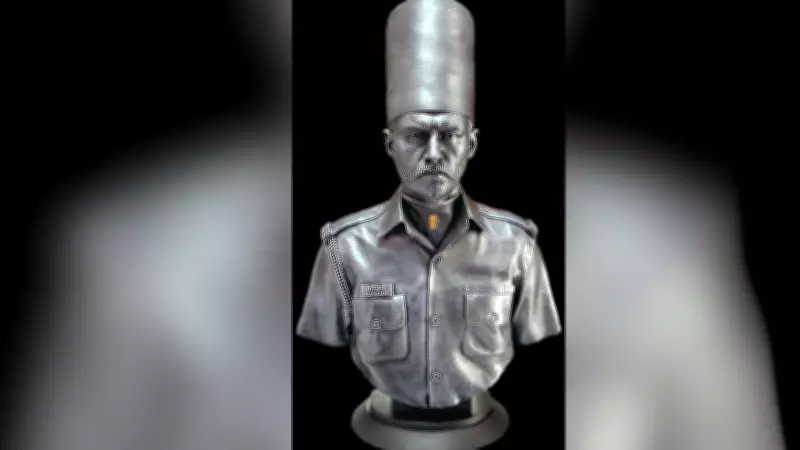
From Archival Photo to Physical Form: The Madras Sappers' Beloved Mascot Recreated
In a remarkable fusion of historical preservation and modern technology, the iconic mascot of the Indian Army's Madras Engineering Group, affectionately known as the Madras Sappers, has been brought to life through advanced 3D printing techniques. Munisamy, representing the archetypal 'Thambi'—a term of endearment for the Sappers' personnel—now stands as a tangible tribute to the unit's rich legacy.
Bridging Centuries with Technology
The project, spearheaded by Colonel Uday Sankeshwar, Director of the Madras Sappers Museum and Archives, involved the meticulous recreation of a two-foot bust of Munisamy. This was achieved by the creative team at IND in a BOX, who worked from archival black-and-white photographs and detailed descriptions. Digital artist Sriram Seshagiri played a pivotal role in transforming these two-dimensional images into three-dimensional physical exhibits, ensuring historical accuracy and emotional resonance.
Shilpa Spoorthy from IND in a BOX explained, "We meticulously 3D printed the bust based on archival materials, capturing every detail from Munisamy's distinctive moustache to his stern eyes, which embody the spirit of the Sappers."

Munisamy: The Epitome of a 'Thambi'
Munisamy, who served as a mule operator during the inter-World War period, symbolizes the resilience and dedication of the Madras Sappers. In an era when mules and other animals were crucial for logistics in challenging terrains, his role was instrumental. Colonel Sankeshwar emphasized, "He enforces the epitome of the Madras Sappers. When we refer to a Thambi, he is the Thambi we refer to, with all the characteristic traits from his appearance to his demeanor."
Historical Murals and Artifacts Reimagined
Beyond Munisamy, the initiative includes the 3D recreation of two significant murals from the Sappers' storied past:
- 'The Opening of the Mandalay Gate': This mural commemorates the recapture of Fort Dufferin in Mandalay, Myanmar, from Japanese forces during World War II.
- 'The Zojila Pass': Highlighting the Sappers' critical role in creating tracks for Indian tanks used against Pakistani positions in Jammu and Kashmir's Zojila region.
Additionally, a model of a narrow-gauge train manufactured by French company Decauville has been reproduced. This train, which operated within the Madras Engineering Group premises in Bengaluru until 1967, served as essential transport for soldiers between the Assaye and Meanee Lines in the cantonment.
Permanent Display and Legacy
The newly created exhibits will be permanently housed at the Museum at the College of Military Engineering in Pune. They will be displayed alongside artifacts from other Sapper units across India, offering visitors a comprehensive glimpse into the military engineering corps' contributions to national defense and history.
This project not only honors the past but also showcases how contemporary technology can breathe new life into historical narratives, ensuring that the legacy of the Madras Sappers and their beloved 'Thambi' continues to inspire future generations.






