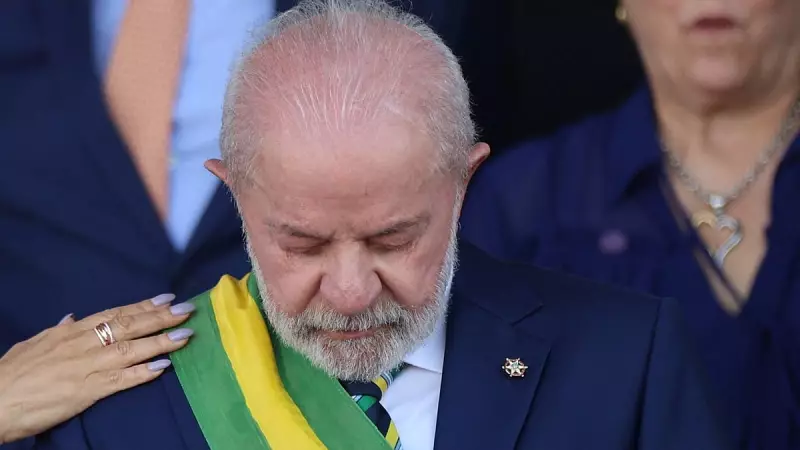
In a move that has sent ripples through Latin American diplomatic circles, Brazilian President Luiz Inácio Lula da Silva held a significant telephone conversation on Saturday. The call was not with Venezuela's de facto leader, Nicolás Maduro, but with the nation's interim president, a title claimed by opposition figure Juan Guaidó. This engagement marks a subtle yet potent shift in Brazil's foreign policy stance towards its politically turbulent neighbor.
A Deliberate Diplomatic Gesture
The conversation, confirmed by sources close to the Brazilian presidency, represents a calculated diplomatic step. By acknowledging Guaidó as the "interim president" of Venezuela, President Lula has directly challenged the legitimacy of Nicolás Maduro's government, which has been in power since 2013. This interaction did not occur in a vacuum; it followed a recent meeting between Lula and Maduro on the sidelines of the COP28 climate summit in Dubai last December. The juxtaposition of these two engagements highlights the complex and often contradictory nature of international relations in the region.
Analysts point out that this move carefully navigates a middle path. While Lula's government has previously criticized Maduro's authoritarian tendencies and the lack of free and fair elections in Venezuela, it has stopped short of fully endorsing Guaidó's claim to the presidency. The Saturday call, therefore, is seen as a signal—a way to pressure Caracas on democratic reforms without severing ties completely. It underscores Brazil's intent to play a more active role as a regional mediator, a position it held during Lula's earlier terms.

Context and Regional Implications
The political crisis in Venezuela has divided the international community for years. Juan Guaidó, the leader of the National Assembly, declared himself interim president in January 2019, arguing that Maduro's re-election was fraudulent. At its peak, his claim was recognized by over 50 countries, including the United States and several major Latin American nations. However, support has waned in recent years as Maduro consolidated his grip on power.
Lula's decision to engage with Guaidó now is particularly noteworthy. It comes at a time when Maduro's government is preparing for a presidential election scheduled for later this year. The international community, including Brazil, is keenly watching whether these polls will meet minimum democratic standards. This phone call serves as a clear message from Brasília about its expectations for a transparent electoral process.
The reaction from Caracas was swift and predictable. Venezuelan officials condemned the move, labeling it as interference in the country's internal affairs and a violation of diplomatic norms. They reiterated their recognition of Maduro as the only legitimate president.
Balancing Act and Future Trajectory
For President Lula, this is a delicate balancing act. On one hand, he faces pressure from domestic political groups and international allies to take a firmer stand against the Maduro regime. On the other, Brazil has significant economic and social ties with Venezuela, and a policy of outright hostility could be counterproductive. The strategy appears to be one of "critical engagement"—maintaining open channels with both sides to potentially influence the outcome of Venezuela's political future.
The long-term consequences of this diplomatic maneuver remain to be seen. It could potentially pave the way for Brazil to facilitate dialogue between the Venezuelan government and the opposition. Alternatively, it might harden positions and lead to further diplomatic frostiness between Brasília and Caracas. What is clear is that Lula has signaled that Brazil will not remain a passive observer in the unfolding drama in Venezuela.
This development reaffirms that the Venezuelan crisis continues to be a central fault line in Latin American politics. The region's major powers, like Brazil, are now cautiously re-engaging with the issue, testing new approaches to navigate one of the hemisphere's most protracted and complex political stalemates. The world will be watching to see if this phone call becomes a footnote or a turning point.