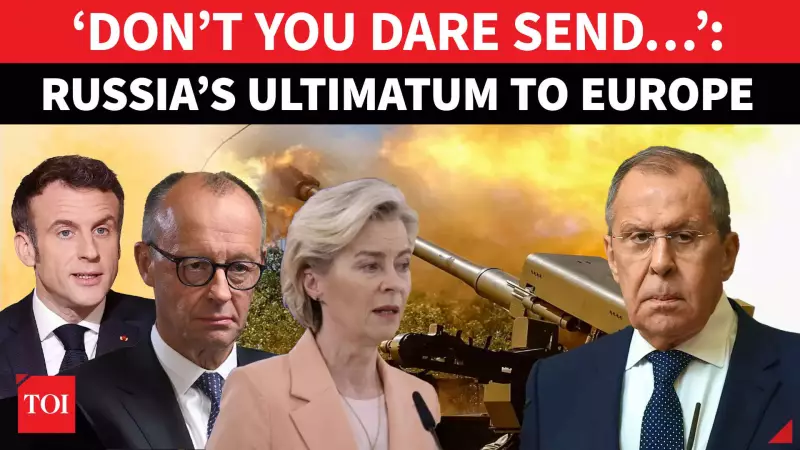
Russian Foreign Minister Sergei Lavrov has launched a fierce attack on a European proposal to send a multinational military force into Ukraine, labelling the plan a "brazen" threat to Russia's national security. The top diplomat made these sharp remarks during an official visit to Egypt on December 19, 2025.
Lavrov's Stern Warning in Egypt
Speaking from Cairo, Lavrov argued that the establishment of such a force would lead to the full-scale militarisation of Ukrainian territory. He framed the proposal not as a peacekeeping effort but as a deliberate attempt to create a strategic launchpad for operations against Russia. This reaction underscores the deep-seated tensions between Moscow and Western powers regarding the future security architecture of Eastern Europe.
Europe's Rationale vs. Moscow's Red Line
European leaders backing the initiative have presented it as a potential stabilising mechanism. Their stated goals include policing a future peace agreement, providing support to Ukrainian troops, securing airspace, and protecting crucial maritime routes. However, Moscow has consistently drawn a hard line. Russia has repeatedly warned that any deployment of Western troops on Ukrainian soil would make those forces "legitimate targets" for its military.

Meanwhile, the government in Kyiv maintains a different perspective. Ukrainian officials insist that robust and concrete security guarantees from Western nations are absolutely essential to deter any future Russian aggression once hostilities cease. This fundamental disagreement highlights the chasm between the opposing sides on how to ensure long-term stability in the region.
Escalating Rhetoric and Global Implications
Lavrov's comments in Egypt represent a significant escalation in diplomatic rhetoric. By characterising the European plan as "brazen," he signals Moscow's view that the proposal crosses a clear boundary. This development threatens to further complicate already stalled peace negotiations and could potentially widen the conflict's geopolitical footprint. The international community is now watching closely to see if this war of words translates into more dangerous actions on the ground.
The standoff places other global players, including nations in the Global South that Russia is actively courting, in a delicate position. Lavrov's choice to deliver this message from Egypt, a key regional power, is likely a calculated move to rally diplomatic support and frame the conflict through the lens of Western encroachment.