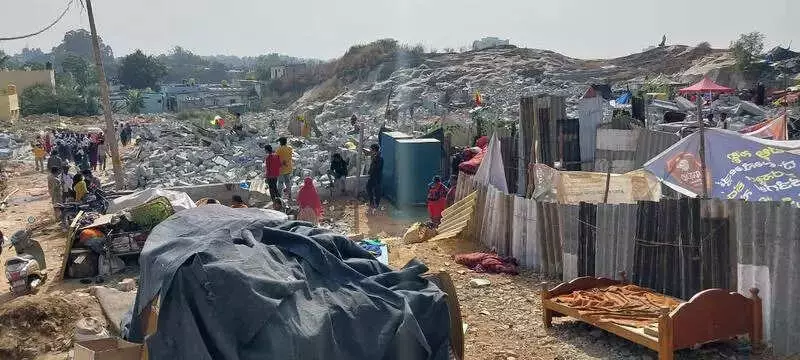
The demolition of unauthorised hutments in Bengaluru's Kogilu area has unexpectedly spiralled into an international controversy, drawing sharp reactions from Pakistan and triggering a firm diplomatic rebuttal from India. The incident, which occurred on December 20, has also ignited a fierce domestic political debate in Karnataka, with allegations of vote-bank politics and illegal immigration flying thick and fast.
Demolition Drive and Domestic Political Firestorm
Authorities in Bengaluru razed a total of 167 unauthorised temporary sheds located in Waseem Layout and Fakir Colony within Kogilu on grounds of encroachment. The action, however, quickly moved beyond a routine civic exercise when Kerala Chief Minister Pinarayi Vijayan criticised the Karnataka government. He claimed that a majority of the affected residents belonged to religious minorities and alleged a targeted action against Muslim communities.
This set the stage for a political slugfest within the state. Karnataka Deputy Chief Minister DK Shivakumar defended the action, stating there was no question of giving a "New Year gift to encroachers" and denying any appeasement politics. He asserted that the government's intent was to help the vulnerable poor by allotting houses under the PM Awas scheme after reports of miscreants exploiting victims.

In contrast, Union Minister Shobha Karandlaje raised the spectre of illegal immigration, suggesting a "deeper conspiracy" involving infiltrators from Bangladesh and Myanmar and calling for a thorough investigation into the antecedents of the encroachers.
International Repercussions and India's Sharp Retort
The issue took a definitive international turn when Pakistan's Foreign Office issued a formal statement. It accused Indian authorities of harassing Muslims, demolishing homes with state support, and interfering with religious celebrations, labelling it a serious concern for minorities in India.
India responded with a strong and categorical rejection. External Affairs Ministry spokesperson Randhir Jaiswal dismissed Pakistan's statements as "unacceptable and hypocritical." In a pointed retort, he said, "India rejects comments coming from a country whose own record on minority rights is abysmal." Jaiswal emphasised that Pakistan's systematic victimisation of minorities of various faiths is well-documented and that its remarks were made without understanding the ground situation, aimed solely at defaming India internationally.
Rehabilitation and Accusations of Political Exploitation
Amid the escalating rhetoric, the Karnataka government has announced a rehabilitation plan. Officials stated that all verified victims would be offered alternative housing. Eligible families will receive houses in Byappanahalli, with each unit costing approximately Rs 11.2 lakh, following a proper verification of documents.
Civil society voices have warned against the political exploitation of the displaced families. M Venkataswamy, president of Samatha Sainika Dala, accused all major political parties of indulging in appeasing their respective vote banks by taking advantage of the Kogilu situation. He lamented that the poor were being used as pawns in a political game.
The Kogilu episode has thus transformed from a local encroachment removal drive into a multi-layered controversy encompassing diplomatic tensions, domestic political accusations, and humanitarian rehabilitation efforts, all under the growing scrutiny of an international spotlight.