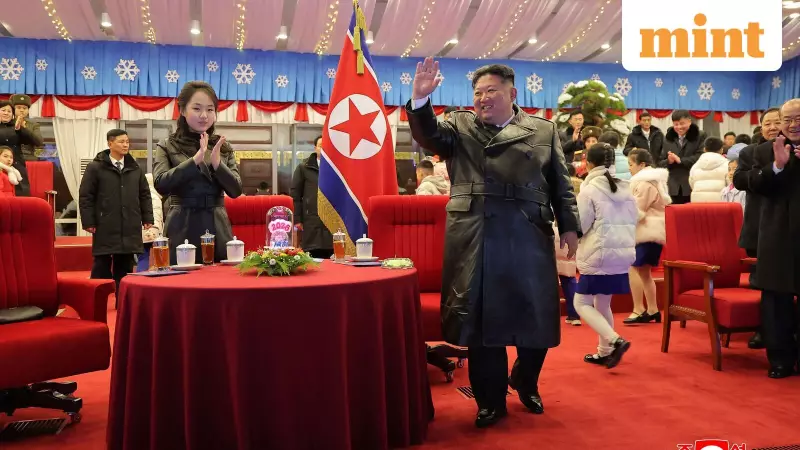
North Korean leader Kim Jong Un has ushered in the year 2026 by strongly praising what he termed an "invincible alliance" with Russia, a partnership that has significantly bolstered his regime's global stance and military capabilities. In a New Year's address delivered from Pyongyang, Kim focused on the deepening ties with Moscow, which have provided both an economic lifeline and a crucial testing ground for his military forces.
A Year of Strategic Military Partnership
Looking back on 2025, Kim Jong Un described it as an unforgettable year, built on the patriotism of his people. The core of this reflection was the military collaboration with Russia. According to transcripts from North Korean state media, Kim specifically saluted his troops who have been deployed to Russian battlefields in the Ukraine war. It is estimated that Pyongyang sent roughly 15,000 troops to fight alongside Russian forces.
In a separate message directed at these soldiers, Kim lauded their "remarkable feats" overseas. He stated that thanks to their "self-sacrificing and devoted struggle," the fraternal friendship and the invincible alliance between North Korea and Russia were growing stronger. This public acknowledgment of troops in a foreign conflict marks a significant shift in Pyongyang's international military engagement.

Domestic Focus Amidst Military Buildup
While the alliance with Russia took centre stage in the geopolitical context, Kim's speech also touched upon domestic achievements. He highlighted progress in construction projects and agricultural harvests. In the final weeks of 2025, his schedule involved visits to factories and a new hospital, where he vowed to improve living standards for North Korean citizens.
However, this domestic focus did not come at the expense of military development. Throughout December 2025, Kim oversaw critical military activities, including the inspection of a nuclear-powered submarine, missile-launch drills, and calls for a modernised weapons industry. The past year also saw him order the mass production of munitions, many of which are exported to Russia, and unveil North Korea's largest-ever warship and a new intercontinental ballistic missile.
Implications for Global Diplomacy and Future Goals
Notably absent from Kim's New Year's address was any direct mention of policy towards the United States. This silence comes after a year where former President Donald Trump expressed a desire to meet again, acknowledging North Korea as "sort of a nuclear power." Since their last meeting in 2019, Pyongyang has refused dialogue, choosing instead to cement its nuclear status and weapons program, empowered by its alignment with Moscow.
The Ukraine conflict has served as a practical testing ground for North Korea, helping identify weaknesses in its aging Soviet-era equipment. In September 2025, Kim hinted that upgrading conventional military capabilities would be a priority for 2026 and beyond. The cooperation has been a two-way street: Pyongyang trades munitions and troops for Moscow's technical and financial assistance, potentially revitalising a defence industry crippled by global sanctions.
The bond was further cemented in December when Kim and Russian President Vladimir Putin exchanged New Year's messages reflecting on their military partnership. Putin declared that 2025 proved the "invincible friendship" between the nations, while Kim asserted their alliance would endure "generation after generation." Looking ahead, Kim Jong Un is expected to formally lay out his foreign-policy and military objectives for the next five years at a Workers' Party Congress early in 2026, with the Russia alliance likely forming its cornerstone.