

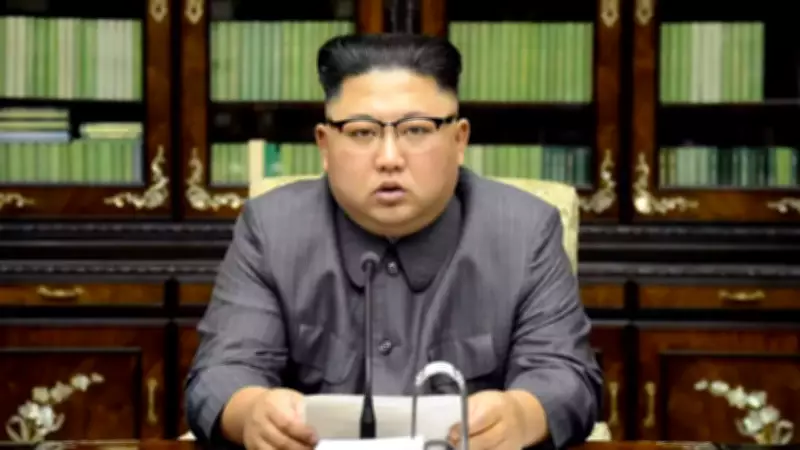
North Korean Leader Kim Jong Un Reaffirms Nuclear Power Status in Major Speech
In a significant address to the Supreme People's Assembly, North Korean leader Kim Jong Un has declared that his country will firmly maintain its status as a nuclear power and will not reverse course on this critical strategic position. The speech, delivered in Pyongyang and reported by state media on Tuesday, marks a hardening of North Korea's stance on the international stage.
South Korea Labeled as "Most Hostile" State
During his parliamentary address, Kim Jong Un described South Korea as the "most hostile" state toward North Korea, signaling a dramatic escalation in rhetoric between the two nations. This characterization represents a significant departure from previous diplomatic language and suggests North Korea will continue with an aggressive, hard-line approach toward its southern neighbor.
"The dignity of the nation, its national interest and its ultimate victory can only be guaranteed by the strongest of power," Kim declared during his speech. "The government of our republic will continue to consolidate our absolutely irreversible status as a nuclear power and will aggressively wage a struggle against hostile forces to crush their anti-North Korean provocations and schemes."

Criticism of United States and Global Policy
In the same parliamentary session, Kim Jong Un launched sharp criticism against the United States, accusing the country of engaging in global "state terrorism and aggression." While not mentioning former U.S. President Donald Trump by name, Kim referenced ongoing conflicts in the Middle East and stated that "choose confrontation or peaceful coexistence is up to them, and we are prepared to respond to any choice."
This dual criticism of both South Korea and the United States underscores North Korea's increasingly isolated position on the world stage and its determination to pursue an independent nuclear path despite international pressure and sanctions.
Constitutional Revisions and Strategic Shifts
State media confirmed that the Supreme People's Assembly passed a revised constitution during the session, though specific details about the constitutional changes were not immediately disclosed. Analysts had anticipated that the revisions might formally designate South Korea as a permanent enemy state and eliminate references to shared nationhood between the two Koreas.
This constitutional development aligns with Kim Jong Un's earlier declaration in 2024 that North Korea would abandon its long-standing objective of peaceful reunification with South Korea. The shift represents a fundamental change in North Korea's strategic approach to inter-Korean relations.
Changing Dynamics in Korean Peninsula Relations
Kim Jong Un's increasingly confrontational stance toward South Korea reflects a notable evolution in North Korea's diplomatic strategy. Previously, South Korea had served as an intermediary during high-profile meetings between Kim and former U.S. President Donald Trump in 2018 and 2019, facilitating dialogue between Pyongyang and Washington.
Now, North Korea appears to view South Korea less as a potential mediator and more as an obstacle to its objectives. This perceptual shift has been accompanied by concrete actions, including efforts to limit the influence of South Korean culture within North Korea and tighten internal controls to prevent external cultural penetration.
Stalled Diplomacy and Shifting Alliances
Talks between North Korea and the United States have remained completely stalled since the collapse of Kim Jong Un's second summit with Donald Trump in 2019. The breakdown occurred primarily over disagreements regarding sanctions relief and denuclearization steps, creating a diplomatic impasse that persists today.
In recent years, North Korea has moved closer to Russia, reportedly sending troops and military equipment to support Moscow's war effort in Ukraine. This military cooperation is believed to be part of an exchange arrangement where North Korea receives technical assistance and other forms of support from Russia in return for its contributions to the conflict.

The combination of nuclear reaffirmation, hostile rhetoric toward South Korea, criticism of the United States, constitutional revisions, and shifting international alliances paints a picture of a North Korea increasingly committed to its current strategic path despite growing international isolation.





