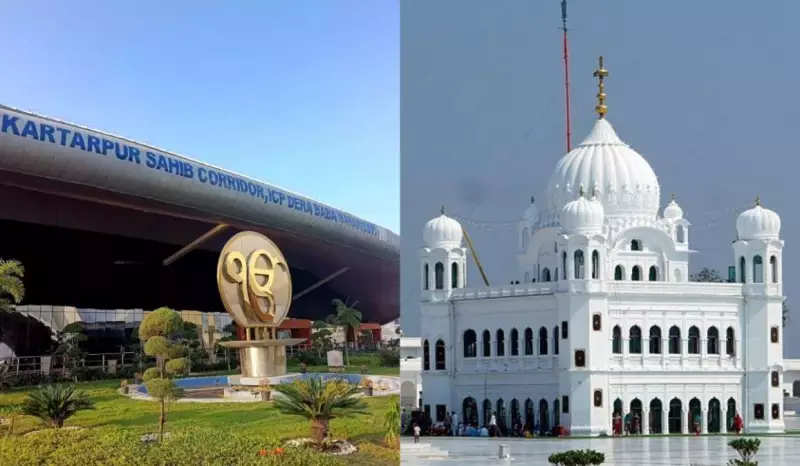
Five years after its historic inauguration, the Kartarpur Corridor has fundamentally transformed the spiritual journey for Sikh devotees seeking to visit one of their holiest sites across the border. This groundbreaking initiative has redefined pilgrimage traditions and fostered unprecedented people-to-people connections between India and Pakistan.
A Gateway to Spiritual Heritage
The Kartarpur Corridor, opened on November 9, 2019, serves as a direct land passage connecting India's Dera Baba Nanak shrine in Gurdaspur district to Gurdwara Darbar Sahib in Kartarpur, Pakistan. This 4.7-kilometer corridor enables Indian Sikh pilgrims to visit the final resting place of Guru Nanak Dev Ji without requiring a visa.
Before the corridor's establishment, devotees faced immense challenges in accessing the sacred site. Many had to undertake complicated visa procedures or view the gurdwara from distant observation points along the border. The corridor has eliminated these barriers, allowing thousands of pilgrims to undertake this spiritually significant journey with relative ease.

Historical Significance and Implementation
The corridor represents a remarkable achievement in cross-border cooperation between two nations with historically tense relations. Guru Nanak Dev Ji, the founder of Sikhism, spent the final 18 years of his life at Kartarpur, making the site profoundly important for the global Sikh community.
The initiative gained momentum following Prime Minister Narendra Modi's government approval in November 2018, with construction progressing rapidly on both sides of the border. The project demonstrated rare bilateral coordination, culminating in the corridor's inauguration just days before the 550th birth anniversary of Guru Nanak Dev Ji.
Pakistan's commitment to the project included developing extensive infrastructure to accommodate pilgrims, while India established state-of-the-art facilities including a passenger terminal building capable of handling 15,000 visitors daily.
Transformative Impact on Pilgrimage and Relations
The corridor's operation has yielded significant benefits beyond spiritual fulfillment. It has created new patterns of religious tourism and fostered unexpected diplomatic warmth through people-to-people contact.
Pilgrims consistently report experiencing emotional moments when visiting the historic gurdwara, with many describing it as a lifelong dream fulfilled. The direct access has particularly benefited elderly devotees who previously couldn't undertake the complicated journey through third countries.
Despite periodic political tensions between India and Pakistan, the corridor has maintained relatively consistent operation, serving as a symbol of hope for improved relations. The project demonstrates how shared cultural and religious heritage can transcend political boundaries.
Future Prospects and Challenges
As the corridor completes five years of operation, stakeholders are evaluating opportunities to enhance the pilgrimage experience. Discussions continue about streamlining registration processes, expanding pilgrimage quotas, and improving facilities for visitors.
The corridor's success has sparked conversations about establishing similar cross-border access to other religious sites in the region. However, ongoing geopolitical considerations and security concerns present challenges that require careful navigation.
The Kartarpur Corridor stands as a testament to the power of faith in bridging divides. It has not only redefined Sikh pilgrimage but also created a unique template for cross-border cooperation that could inspire similar initiatives elsewhere.
As devotees continue to walk the path their spiritual leader once tread, the corridor remains a living bridge connecting communities, cultures, and nations through shared reverence and spiritual bonds that know no boundaries.