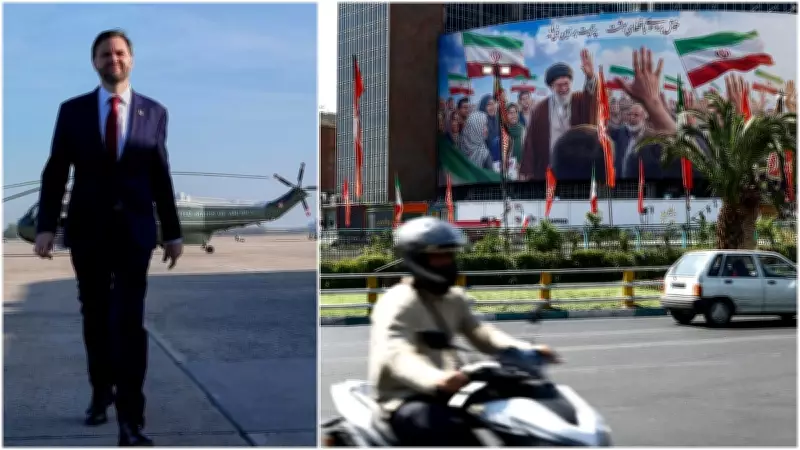
JD Vance Issues Stern Warning to Iran Ahead of Pakistan Negotiations
United States Senator JD Vance has delivered a pointed warning to Iran as he prepares to embark on a diplomatic mission to Pakistan for critical negotiations. In a statement that underscores the high stakes of the ongoing West Asia crisis, Vance emphasized America's readiness for dialogue but cautioned Tehran against any attempts at manipulation.
'Don't Play Us': A Clear Message from Washington
Speaking ahead of his departure, Senator Vance made his position unequivocally clear. 'Don't play us' was his direct message to Iranian leadership, highlighting concerns about potential duplicity in diplomatic engagements. This warning comes at a time of heightened tensions in West Asia, where Iran's regional activities have been a persistent source of international concern.
Vance elaborated on the United States' approach, stating, 'As the president of the United States said, if the Iranians are willing to negotiate in good faith, we're certainly willing to extend the open hand.' This statement reflects the Biden administration's dual-track strategy of maintaining pressure while keeping diplomatic channels open, a delicate balance that Vance's mission to Pakistan aims to advance.

The Pakistan Negotiations: A Strategic Diplomatic Move
The choice of Pakistan as the venue for these negotiations is particularly significant. Pakistan maintains complex relationships with both the United States and Iran, positioning it as a potential mediator in regional disputes. Vance's visit signals Washington's intent to leverage Pakistan's diplomatic influence to address broader security concerns in West Asia.
Key objectives for the negotiations likely include:
- Addressing Iran's nuclear program and regional proxy activities
- Exploring pathways for de-escalation in conflict zones
- Strengthening counter-terrorism cooperation
- Discussing economic sanctions and potential relief measures
Context of the West Asia Crisis
The negotiations occur against the backdrop of what analysts describe as one of the most volatile periods in recent West Asian history. Multiple flashpoints—from Syria to Yemen to the Persian Gulf—have created a complex security landscape where miscalculation could lead to broader conflict. Vance's warning to Iran reflects American frustration with what many in Washington perceive as Tehran's destabilizing behavior across the region.
Pakistan's role in this diplomatic effort cannot be overstated. As a nuclear-armed Muslim-majority nation with historical ties to both Washington and Tehran, Islamabad possesses unique credibility that could facilitate breakthroughs where direct talks have stalled. The success of Vance's mission may hinge on Pakistan's ability to bridge the considerable trust deficit between the United States and Iran.
What's at Stake for All Parties
For the United States, successful negotiations could mean:
- Reduced regional tensions and lower risk of military confrontation
- Progress on nuclear non-proliferation objectives
- Enhanced security cooperation with regional partners
For Iran, the negotiations represent an opportunity to:
- Secure relief from crippling economic sanctions
- Gain international legitimacy for its regional role
- Address security concerns about American military presence
For Pakistan, hosting these talks offers a chance to:
- Reassert its diplomatic relevance on the global stage
- Balance its relationships with competing powers
- Address its own security concerns related to regional instability
As Senator Vance prepares for what promises to be challenging negotiations, his warning to Iran serves as both a diplomatic opening and a clear boundary. The world will be watching closely to see whether this Pakistan-mediated effort can achieve what numerous previous attempts have failed to accomplish: meaningful progress toward stability in West Asia.