

Japan's Landslide Election Victory: A New Era for Takaichi and Strategic Opportunities for India
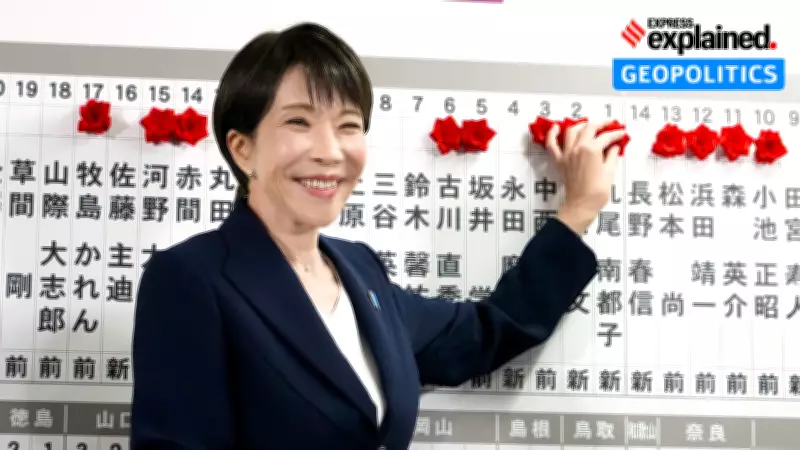
The landslide victory of Sanae Takaichi's Liberal Democratic Party (LDP) in Japan's Lower House snap elections on February 8, 2026, represents far more than a routine renewal of political mandate. This decisive win, securing 316 out of 465 seats—a two-thirds supermajority—marks a significant shift in Japan's political landscape, empowering Prime Minister Takaichi with unprecedented parliamentary authority and momentum. At 64, Takaichi, Japan's first woman prime minister since taking office in October 2025, called for these snap polls to strengthen backing for her policies, and the results have validated her strategic gamble.
Market Optimism and Economic Implications
Following the election, Tokyo stocks rallied over 5%, with the Nikkei and Topix indices hitting record highs. This surge, dubbed the "Takaichi trade," reflects investor confidence in smoother policymaking and continuity under her leadership. Takaichi's platform, which combines economic stimulus with national security and conservative social values, initially unsettled markets due to promises of major tax cuts and increased defense spending. However, her emphasis on "responsible and proactive fiscal policy" has reassured investors, especially given Japan's deficit being the smallest among G-7 nations, providing fiscal room for her agenda.
Domestic Political Mood and Social Shifts
Politically, Takaichi has reshaped the LDP's voter coalition by appealing to conservative elements with her nationalistic tone, focus on constitutional revision, and resistance to progressive reforms like separate surnames for married couples. This strategy brought back voters from smaller right-leaning parties, while her status as a break from the elderly male elite attracted younger voters, boosting her personal approval rating to nearly 70%. The opposition's fragmentation, exemplified by the defeat of the Centrist Reform Alliance, highlights an electorate increasingly concerned with social cohesion and national identity, leading to a more guarded approach to globalization domestically.

National Security and Constitutional Reform
The supermajority victory enables Takaichi to pursue constitutional amendments, a core LDP ambition that could reinterpret Japan's pacifist Constitution and mark a historic departure from post-war norms. Coupled with pledged increases in defense spending, this signals Japan's move toward becoming a "normal" military power in the Indo-Pacific, reflecting a more assertive stance in an unstable region.
Regional Dynamics: US, China, and Strategic Realignments
Takaichi's victory will reverberate across Asia, with Japan-US relations remaining a cornerstone of foreign policy. Her upcoming visit to Washington in March to meet President Trump underscores continuity, bolstered by Trump's endorsement and shared hawkish views on China. However, tensions with Beijing complicate matters; Takaichi's remarks on Taiwan triggered Chinese retaliation through rare-earth export restrictions and travel warnings. This dynamic suggests a policy of guarded engagement with China—firm on security but pragmatic on trade—with no immediate breakthroughs expected at upcoming summits like APEC in Shenzhen.
Enhanced India-Japan Strategic Partnership
For India, Takaichi's mandate presents a significant opportunity to deepen bilateral ties. Prime Minister Modi's early congratulations reflect strategic convergence, as both nations share concerns over China's assertiveness and commitment to a free and open Indo-Pacific. Takaichi's focus on defense and constitutional reform is likely to enhance cooperation in areas such as:
- Maritime security and joint military exercises
- Technology partnerships and critical minerals supply chains
- Economic investments under "Make in India" and infrastructure projects
Japanese investment in India, already substantial in railways and manufacturing, is poised to expand within a more explicit security framework, evolving the partnership from economic to strategic, embedded in Quad and broader Indo-Pacific initiatives.

Conclusion: A Defining Moment for Japan and Its Global Role
Sanae Takaichi's landslide victory embodies both continuity and rupture in Japanese politics. Domestically, it has revived conservative confidence and market optimism, while regionally, it steers Japan toward a more assertive identity that will test relations with China and reshape strategic alliances. For India, this moment offers a chance to solidify a durable partnership with a Japan increasingly aware of its power and purpose, redefining its direction on the global stage.





