External Affairs Minister Dr. S Jaishankar offered a striking analogy for the contemporary global landscape, comparing it to India's own historical experience with coalition politics. He made these remarks while addressing a session titled ‘From Diplomacy to Discourse’ at the Pune Book Festival on Saturday.
A World Without a Clear Majority
Jaishankar stated that the current international order, where no single nation holds undisputed supremacy, closely resembles the era of coalition governments in India. "India had an era of coalition politics, and the world is today like that. Nobody has a majority. Constantly, combinations are formed, deals are struck, and somebody is up or down," he explained. He described a multipolar world as one with many partners, where the prevailing combination of parties makes decisions for the day, but that combination is perpetually in flux.
In such an environment, the minister emphasized that India must stay on top of its game by adopting a nimble and agile diplomatic policy. "The country also has to change sides all the while to further its cause," he noted, acknowledging the increased complexity of managing foreign relations. This intricate balancing act involves engaging the United States, managing the relationship with China, and reassuring Russia despite external pressures related to the Ukraine conflict.

Rebuilding and Steadying Key Relationships
Jaishankar outlined several regional priorities for Indian diplomacy. He identified Europe as a very important partner where more effort is needed. Simultaneously, India must focus on rebuilding its ties in critical regions like the Gulf, Central Asia, and South East Asia. Regarding neighbors in the subcontinent, he stressed the importance of maintaining steady relations, using a familial metaphor. "It is like a family. Some members may get upset with you, but as the biggest member of the family, it is our responsibility to make the extra effort," the External Affairs Minister said.
Indians as Pillars of the Emerging Global Workforce
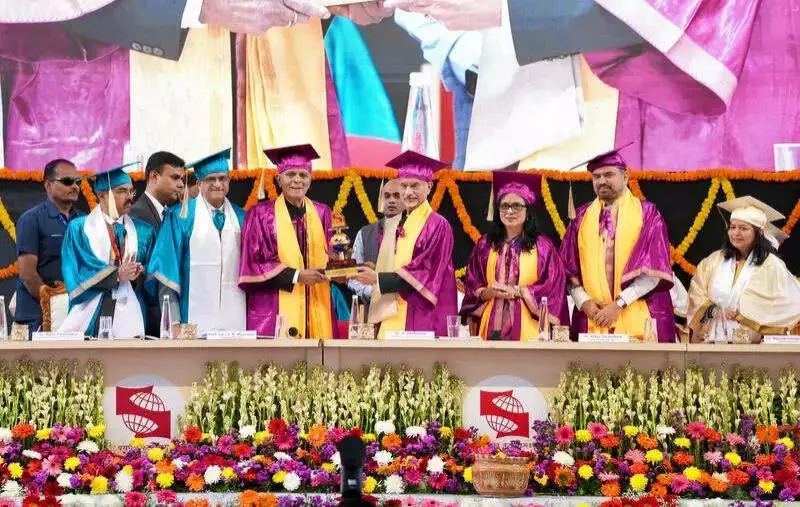
In a separate address at the 22nd convocation of Symbiosis International (Deemed University) on the same day, Jaishankar highlighted the significant role Indians are playing in the forming global workforce. He pointed out that this workforce is underpinned by mobility, and Indians are becoming an increasingly impactful part of it.
"This has implications for the government, which has to ensure the welfare of this diaspora in conflict situations. Politics of the mobility needs to be managed as well," he stated. The minister observed that Indian workers are globally recognized for their strong work ethic, technological aptitude, and family-centric culture.
Jaishankar termed this positive evolution in perception an undeniable reality, substantiated by the growth of global capability centers in India, rising international demand for Indian talent, and numerous individual success stories. "India is defined today by its talent and skill. All these have helped shape our national brand," he asserted. He added that India's need for skilled human resources extends beyond techies, lawyers, and doctors to include teachers, researchers, historians, and artists. Notably, he pointed out that India has started to search for trained human resources when many developed nations are struggling to find them.