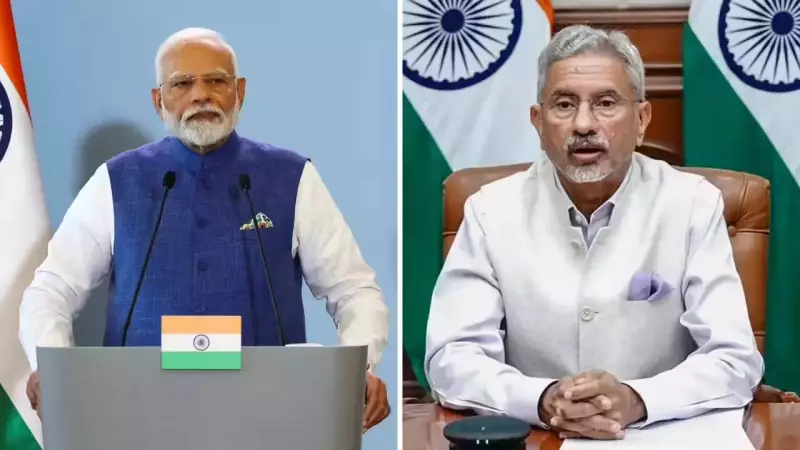
In a significant address that wove together ancient wisdom and contemporary statecraft, External Affairs Minister Dr. S. Jaishankar presented a robust vision of India's diplomatic identity. Speaking on December 20, 2025, he moved beyond individual roles to emphasize the foundational importance of national leadership in shaping a country's global stance.
Leadership Over Individuals: The "One Modi" Assertion
Responding to a query about whether "one Jaishankar is enough" for India's diplomacy, the Minister provided a profound rebuttal. He clarified that nations are not defined by their ministers or bureaucrats alone, but by their overarching leadership. In the context of India, he pointedly stated that there is "only one Modi," underscoring Prime Minister Narendra Modi's central role in defining the nation's current trajectory and international character. This remark highlights a view of foreign policy as a strategic extension of a nation's core leadership and vision.
Epic Exemplars: Krishna and Hanuman as Diplomatic Ideals
Jaishankar then delved into India's rich civilisational history to draw timeless lessons in statecraft. He identified Lord Krishna from the Mahabharata and Lord Hanuman from the Ramayana as the greatest diplomats from Indian epics. He elaborated on Hanuman's mission to Lanka, describing it as a masterclass in intelligence gathering, persuasive communication, and precise strategic execution. Similarly, he portrayed Lord Krishna's role in the Kurukshetra conflict as that of the ultimate negotiator and strategist, navigating an immensely complex web of alliances and power struggles.

Projecting Civilisational Confidence in Global Affairs
The External Affairs Minister used these analogies to make a larger point about India's approach to the world stage. He argued that India must move with confidence to project its own civilisational understanding of diplomacy, rather than uncritically borrowing frameworks from the West. This involves integrating ancient strategic thinking, which values dialogue, intelligence, and ethical statecraft, with the demands of modern geopolitics and national interest.
The remarks collectively underline a distinct philosophical underpinning of India's contemporary foreign policy. They suggest a conscious effort to blend ancient Indian thought with contemporary leadership, creating a unique diplomatic persona that is both rooted and globally engaged. This approach positions India's foreign policy not just as a set of transactions, but as an expression of its historical depth and strategic culture.