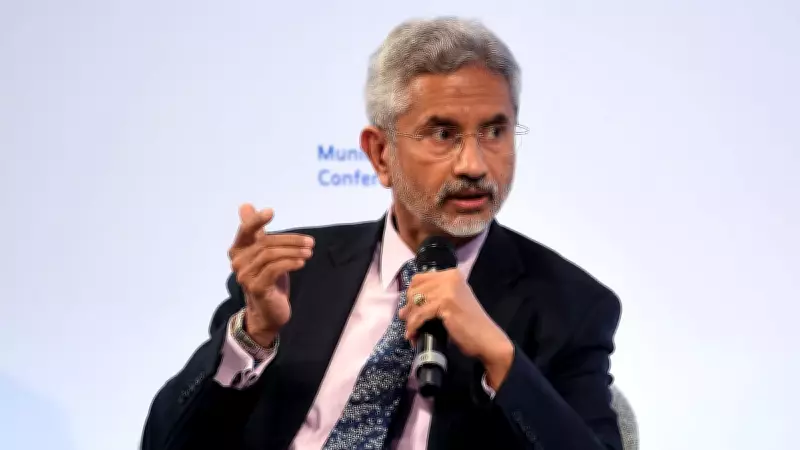
Jaishankar Clarifies India's Oil Import Policy at Munich Security Conference
External Affairs Minister S Jaishankar has articulated India's pragmatic approach to energy procurement, emphasizing that the nation's oil purchases are fundamentally guided by economic and strategic considerations. Speaking at a high-profile event on the sidelines of the Munich Security Conference on Saturday, Jaishankar provided a robust defense of India's independent energy policy amidst growing international scrutiny.
Economic Pragmatism Over Political Pressure
In his address, Jaishankar drew a clear parallel between India's decision-making process and that of other global players, including European nations. He stated unequivocally that oil companies operating within India meticulously evaluate three critical factors: availability in the global market, overall costs including transportation and pricing, and associated geopolitical and economic risks. Only after this comprehensive assessment do they proceed with transactions that align with India's national interests.
"Oil companies in India, as in Europe, and likely in other regions worldwide, analyze availability, scrutinize costs, assess risks, and ultimately make decisions they deem most beneficial," Jaishankar asserted. This statement serves as a direct response to mounting pressure from certain Western quarters, notably figures like U.S. Senator Marco Rubio, who have insisted that India should commit to halting all oil imports from Russia.

Navigating Global Energy Dynamics
The minister's remarks underscore India's steadfast commitment to securing affordable and reliable energy supplies for its rapidly growing economy. With global oil markets experiencing significant volatility and shifting alliances, India's strategy prioritizes energy security and economic stability. Jaishankar highlighted that this approach is not unique to India but is a common practice among nations seeking to balance domestic needs with international obligations.
The timing of this clarification is particularly significant, coming during a major international security forum where energy dependencies and geopolitical alignments are under intense discussion. By framing India's actions within a broader global context, Jaishankar effectively countered narratives that single out India for its trade relations with Russia.
Broader Implications for Diplomacy and Trade
This development highlights several key aspects of contemporary international relations:
- Sovereign Decision-Making: India reaffirms its right to make independent economic choices based on national interest.
- Energy Security: Ensuring stable energy supplies remains a top priority for sustaining economic growth.
- Diplomatic Balancing: India continues to navigate complex relationships with both Western allies and traditional partners like Russia.
- Global Double Standards: Jaishankar's comparison with Europe subtly points out inconsistencies in international expectations.
As global energy landscapes evolve and geopolitical tensions persist, India's calibrated approach to oil imports will likely remain a focal point of international discourse. Jaishankar's firm stance at Munich signals that India will not compromise on its energy needs or economic priorities, even amid external pressures.