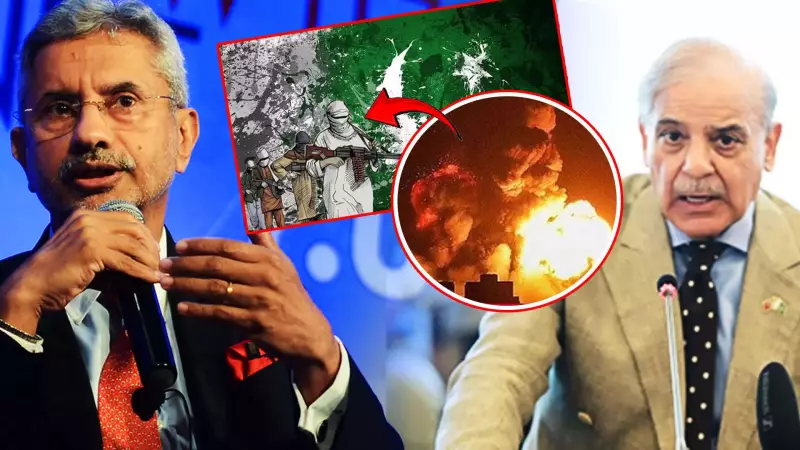
External Affairs Minister Dr. S. Jaishankar delivered a stark assessment of India's relationship with Pakistan, stating that New Delhi no longer holds any false hopes about its western neighbour abandoning terrorism. His remarks came during an interaction in Luxembourg on January 7, 2026.
No Illusions About Pakistan's Intentions
Jaishankar declared that Pakistan's persistent support for cross-border terrorism has compelled India to fundamentally recalibrate its foreign policy approach. He described Pakistan as a unique and dangerous exception among all of India's neighbouring countries.
The minister asserted that terrorist camps have functioned openly on Pakistani soil for decades, enjoying clear state backing. This reality, he emphasized, has shaped India's strategic thinking and its resolve to confront the challenge directly.

Critique of Global Double Standards
Jaishankar did not mince words when addressing the international community's response. He criticized global powers for what he termed glaring double standards.
He pointed to the selective expression of concern during Operation Sindoor as a prime example, suggesting that geopolitical interests often override consistent principles when dealing with terrorism emanating from Pakistan.
India's Contrasting Approach to Neighbours
Drawing a sharp contrast, the External Affairs Minister highlighted India's role as a benevolent and swift responder to crises in the region. He cited India's humanitarian assistance to Sri Lanka, Myanmar, and Afghanistan in times of distress.
This, he explained, underscores India's fundamental policy: to extend a helping hand to neighbours in need while remaining unequivocally firm against those who choose to export violence and instability. The core message was unambiguous—India is willing to engage, assist, and cooperate extensively, but it will do so strictly on its own terms.
Jaishankar's statements reinforce the current Indian government's hardened stance towards Pakistan, moving past decades of complex diplomacy to a more direct, security-focused policy based on the recognition of a persistent threat.