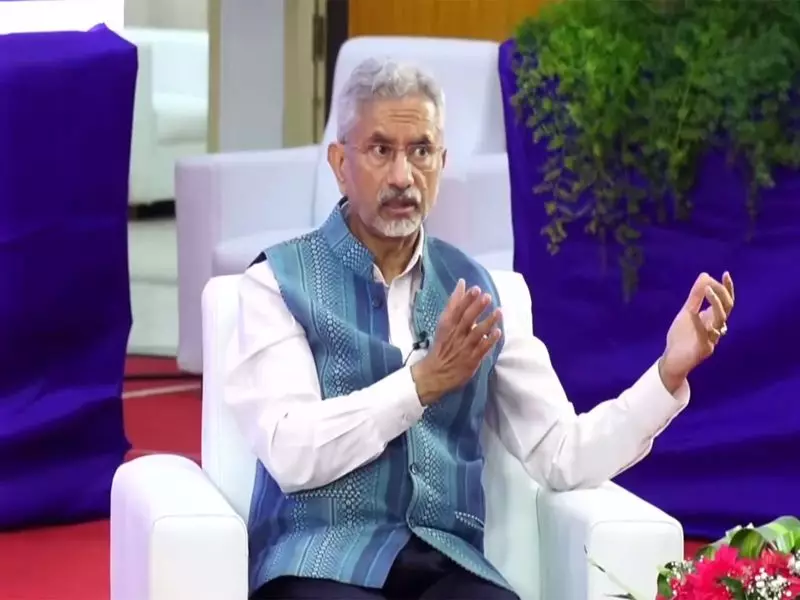
External Affairs Minister Dr. S. Jaishankar has delivered a robust affirmation of India's sovereign right to determine its national security responses. Speaking at an event, the minister left no ambiguity about New Delhi's position, stating that the manner in which India exercises its right to self-defence is a decision for India alone to make.
A Clear Message on Strategic Autonomy
Dr. Jaishankar's comments serve as a powerful reiteration of India's strategic autonomy in matters of defence and foreign policy. He emphasized that the country's actions are based on its own assessment and legitimate security concerns. This statement is widely seen as a direct reference to India's decisive military action following the Pulwama terror attack in 2019.
In February 2019, India conducted precision airstrikes on a terrorist training camp in Balakot, Pakistan. This operation, known as the Balakot airstrike, was a response to the deadly suicide bombing in Pulwama, Jammu and Kashmir, which claimed the lives of 40 Central Reserve Police Force (CRPF) personnel. Jaishankar's remarks underscore that such decisions are made independently, reflecting India's resolve to protect its territory and citizens.

Context and International Diplomacy
The External Affairs Minister made these observations while interacting with the Indian community in Nigeria. His words reinforce the government's consistent stance that it will not hesitate to take necessary measures to counter cross-border terrorism. The Balakot operation was a landmark event that demonstrated a shift in India's response paradigm to terrorist provocations originating from foreign soil.
Jaishankar's assertion also carries significant weight in the context of international diplomacy, where nations often face external pressure regarding their internal security measures. By clearly stating that "how India exercises... is up to India," he draws a firm line on the nation's prerogative in such critical matters. This principle of non-interference in core security decisions is a cornerstone of India's foreign policy approach.
Implications for Regional Security
The minister's unambiguous declaration sends a clear message to the region and the global community about India's posture. It highlights several key points:
- Sovereign Right: India reserves the sole right to judge the nature and timing of its response to threats.
- Zero Tolerance for Terrorism: The country maintains a policy of zero tolerance towards cross-border terrorism.
- Strategic Confidence: India possesses the capability and the political will to act decisively in its defence.
This doctrine of proactive defence, as evidenced in 2019, continues to define India's security strategy. Jaishankar's comments solidify the narrative that India's actions are deliberate, sovereign choices made to safeguard national interests, and not reactions dictated by external actors or narratives.