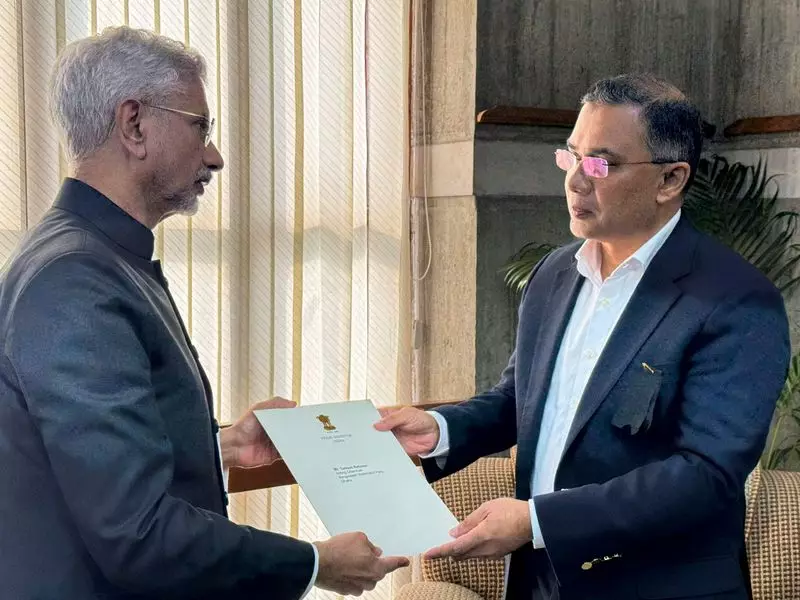
In a significant diplomatic gesture, India's External Affairs Minister, Dr. S. Jaishankar, personally handed over a letter from Prime Minister Narendra Modi to Mr. Tarique Rahman, the acting chairman of the Bangladesh Nationalist Party (BNP), during a meeting in London. The encounter, which took place on Wednesday, underscores India's continued engagement with key political figures in its neighboring nation.
A Meeting of Diplomatic Significance
The meeting was not a formal, pre-scheduled diplomatic event but a purposeful interaction arranged during Dr. Jaishankar's visit to the United Kingdom. The External Affairs Minister was in London for a series of engagements when he met with the exiled BNP leader. The central element of this exchange was the handover of a written communication from the Indian Prime Minister, the contents of which have not been publicly disclosed.
Tarique Rahman, the eldest son of former Bangladesh Prime Minister Khaleda Zia, has been living in London since 2008. He serves as the acting chairman of the BNP, one of Bangladesh's two major political parties. His mother, the party's chairperson, is currently in Dhaka facing various legal challenges.
Context of India-Bangladesh Ties
This move is being closely watched by political observers as it occurs against the backdrop of India's traditionally strong relationship with the current Awami League government led by Prime Minister Sheikh Hasina. India and Bangladesh share deep historical, cultural, and economic ties, with cooperation spanning security, trade, and connectivity projects.
Dr. Jaishankar's act of delivering the letter is interpreted as a nuanced diplomatic step, indicating New Delhi's interest in maintaining open channels of communication with all significant political stakeholders in Dhaka. It reflects a foreign policy approach that values long-term stability and relationships beyond the incumbent administration.
The Indian government has historically maintained a stance of non-interference in the internal affairs of its neighbors, while simultaneously fostering people-to-people and political ties. This interaction aligns with that principle, focusing on dialogue and communication.
Reactions and Implications
While official statements from both sides have been minimal, the meeting has generated considerable discussion in political circles. Analysts suggest that such outreach could be part of a broader effort to ensure continuity and understanding in bilateral relations, regardless of the political landscape in Bangladesh following future elections.
The letter from Prime Minister Modi is seen as a symbolic yet potent tool of diplomacy. It personalizes the engagement and carries the weight of the highest office in India. The specific message, while private, is believed to encompass themes of regional cooperation, shared prosperity, and stability.
For the BNP, which has been out of power for over a decade, this acknowledgment from the Indian leadership is a moment of notable diplomatic recognition. It places the party firmly within the scope of India's diplomatic engagements concerning Bangladesh.
This development does not signify a shift in India's policy but rather an expansion of its diplomatic engagements. The Indian government continues to have a robust and multifaceted partnership with the government of Prime Minister Sheikh Hasina, which has seen significant progress in recent years.
Looking Ahead
The handover of the letter is likely to be followed by careful observation of the political climate in Bangladesh. As the country moves toward its next general election, the positions and relationships of major political parties will be crucial. India's action demonstrates a proactive and pragmatic approach to its neighborhood policy, aiming to build bridges and foster an environment of mutual trust with all legitimate political entities.
In conclusion, Dr. Jaishankar's meeting with Tarique Rahman and the conveyance of PM Modi's letter marks a subtle but important chapter in the complex tapestry of India-Bangladesh relations. It highlights the importance of sustained dialogue and the need for major regional powers to engage with a broad spectrum of political voices to ensure enduring peace and partnership in South Asia.