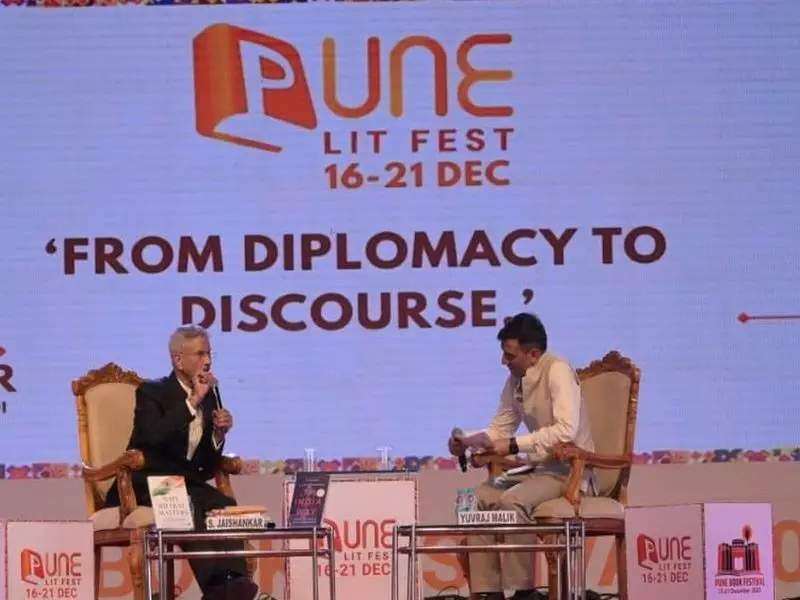
External Affairs Minister Dr. S. Jaishankar delivered a compelling address at the Pune Literature Festival 2025, drawing insightful parallels between the dynamics of coalition politics within India and the evolving structure of the international order towards multipolarity. His speech provided a unique lens through which to view both domestic governance and global diplomacy.
Bridging Domestic and Global Political Realities
Speaking at the well-attended literary event, Jaishankar articulated that the art of managing a coalition government shares fundamental similarities with navigating a multipolar world. He explained that in both scenarios, no single entity holds absolute dominance. Success, whether in Delhi or on the global stage, depends on constant negotiation, consensus-building, and a delicate balance of interests among various stakeholders.
"In a coalition, different parties bring different priorities to the table. You have to listen, engage, and find common ground to ensure stability and progress," Jaishankar stated, implying that this is precisely what nations must do in today's international landscape. He emphasized that the era of a unipolar world led by one hegemony is conclusively over, making way for a more distributed and complex network of influential powers.

The Pillars of India's Diplomatic Approach
Jaishankar used this analogy to underscore the principles guiding India's foreign policy. He highlighted several key points that define the nation's stance in the multipolar framework:
- Strategic Autonomy: India maintains its independent decision-making, much like a political party in a coalition retains its core ideology while collaborating on a common minimum program.
- Engagement with All: The minister reinforced India's commitment to engaging with multiple global power centers, including the United States, Russia, the European Union, and regional groupings, to secure its national interests.
- Focus on Development: Just as domestic coalitions often unite on an agenda of economic growth, India's foreign policy is intensely focused on facilitating the country's development needs through international partnerships.
He pointed out that this multifaceted approach allows India to secure its interests more effectively in a world where economic, political, and security influence is dispersed among several nations and blocs.
Context and Implications for Global Affairs
The minister's comments come at a time when global alliances are in flux, and traditional power structures are being challenged. By linking the familiar concept of coalition politics to the broader theme of multipolarity, Jaishankar made a complex geopolitical trend relatable to the Indian public.
He argued that India's extensive experience with democratic coalitions has, in fact, prepared it to be a skilled and responsive player in the contemporary world order. The need for dialogue, respect for diverse viewpoints, and the pursuit of mutually beneficial outcomes are skills honed domestically and now applied internationally.
"The world is now a coalition of major powers," Jaishankar remarked, suggesting that understanding this reality is crucial for any nation's success. His speech at the Pune LitFest 2025 was not just an analysis of global trends but also a subtle affirmation of India's democratic maturity and its readiness to shape, rather than merely respond to, global outcomes.
In conclusion, Dr. S. Jaishankar's lecture provided a sophisticated yet accessible framework for understanding India's strategic posture. By drawing a clear line from the negotiation tables of national politics to the diplomatic forums of world affairs, he positioned India as a natural and adept contributor to the emerging multipolar era, leveraging its domestic political wisdom on the global stage.