In a bold diplomatic manoeuvre that has sent shockwaves through international relations, Israel has formally recognised the self-declared Republic of Somaliland. This landmark decision, announced on 5 January 2026, marks the first time any country has extended full diplomatic recognition to the breakaway region of Somalia. The move is seen as a calculated play to secure Israel's interests in the strategic waterways of the Red Sea and establish a foothold in the geopolitically volatile Horn of Africa.
Strategic Gambit in the Red Sea
The recognition is far more than a symbolic gesture; it is a hard-nosed security deal. Israel aims to share intelligence and collaborate on securing the Bab al-Mandab Strait, a vital maritime chokepoint connecting the Red Sea to the Indian Ocean. Somaliland's territory lies just south of this strait, directly across the Gulf of Aden from areas in Yemen controlled by the Houthi militants.
"No one can ignore the strategic location of Somaliland," stated Danny Danon, Israel's ambassador to the United Nations. "The straits are a strategic point." This partnership provides Israel with a valuable vantage point against the Houthis, who have waged attacks on shipping lanes during the Gaza war, disrupting global commerce.

A New, Confident Israel on the World Stage
Analysts view this decision as a testament to Israel's transformed posture after two years of intense conflict. "Israel is less constrained by what others will say," observed Ofer Guterman, a senior researcher at the Tel Aviv-based Institute for National Security Studies. The nation is leveraging its military dominance to assert diplomatic influence, moving beyond regional confines.
This confidence is evident in Israel proceeding without public U.S. backing to sign an agreement with a Muslim-majority entity. Israeli Foreign Minister Gideon Sa'ar was unequivocal, writing on X: "Spoiler alert: no one will determine for Israel whom it may conduct diplomatic relations with."
Regional Repercussions and Widespread Condemnation
The move has ignited fierce opposition. Somalia, a member of the Arab League, decried it as unacceptable foreign interference. Houthi leader Abdul-Malik al-Houthi branded it a "hostile and illegitimate act" and warned any Israeli presence in Somaliland would be a military target.
The recognition also complicates existing rivalries in the Horn of Africa. Turkey supports Somalia's central government, while the UAE and Egypt back opposing sides in Sudan's civil war. Egyptian officials see Israel's move as a threat to their water dispute with Ethiopia, as Cairo has been building alliances in the region.
Former U.S. National Security Council Africa director Cameron Hudson warned that Israel's power projection could further destabilise the region, accusing it of "unilaterally advancing its own interests at the expense of others."
What Somaliland Gains and the Security Calculus
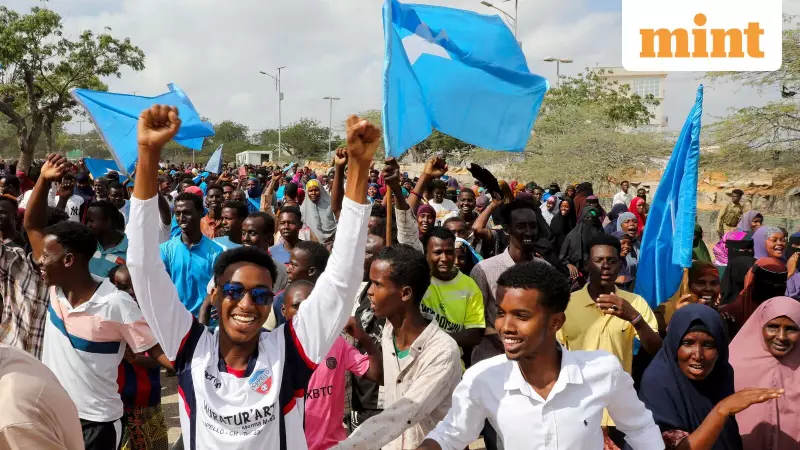
For Somaliland, a territory of 6.2 million people that declared independence in 1991, this recognition is a decades-old aspiration. It hopes Israel's lead will inspire others to follow, though the UN does not recognise its statehood. Previously, only Taiwan had diplomatic ties, stopping short of full recognition.
In practical terms, Somaliland gains a potential security partner. It has monitored Houthi arms trading and training with the Somali al Qaeda affiliate, al-Shabaab. A UN report in October 2025 confirmed Houthis were transferring arms to al-Shabaab. Somaliland relies on tribal intelligence but lacks high-tech reconnaissance capabilities that Israel could provide, aiming to prevent the Red Sea from being cornered by threats from both coastlines.
While Somaliland officials deny plans for an Israeli military base, the territory's underused port and long runway at Berbera are valuable assets it has offered to partners in exchange for closer ties.
This unprecedented recognition by Israel is a definitive signal of its intent to operate as an independent, strategic power on the global diplomatic chessboard, willing to redraw the rules of engagement in one of the world's most contested regions.