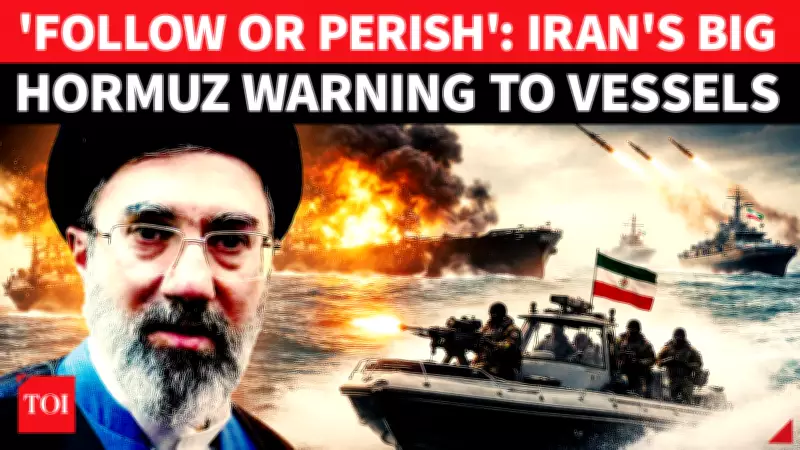
IRGC Tightens Control Over Strait of Hormuz With Navigation Warning
The strategic Strait of Hormuz remains a focal point of geopolitical tension despite a fragile ceasefire agreement between the United States and Iran. According to reports from Iranian state media, the Islamic Revolutionary Guard Corps (IRGC) has issued a significant maritime navigation warning, sharing detailed charts that outline specific routes for commercial vessels to follow.
Revised Shipping Routes To Avoid Potential Hazards
The newly released navigation charts, dated from February 28 to April 9, instruct ships to travel further north through waters closer to Iran's mainland near Larak Island. This route was reportedly observed being used by some vessels during the recent period of conflict. The IRGC's directive appears designed to keep commercial traffic away from areas where naval mines might be present, though it remains unclear whether any mines have been cleared from the alternative route since the charts were issued.
The timing of this navigation warning is particularly significant, coming amid ongoing ceasefire negotiations between Washington and Tehran. The Strait of Hormuz serves as a critical chokepoint for global oil shipments, with approximately one-fifth of the world's petroleum passing through these narrow waters. Any disruption to shipping in this region could have immediate consequences for international energy markets and global economic stability.

Heightened Maritime Security Concerns
This development represents the latest in a series of escalatory measures in the strategically vital waterway. The IRGC's public release of specific navigation instructions underscores Tehran's determination to assert control over maritime traffic in what it considers its territorial waters. Analysts suggest this move serves multiple purposes: demonstrating Iran's capability to influence shipping patterns, potentially testing the boundaries of the ceasefire agreement, and sending a clear message about who controls access through the strait.
The situation remains fluid, with international observers closely monitoring whether commercial vessels will comply with the IRGC's routing suggestions. Some shipping companies may face difficult decisions about whether to follow the Iranian guidance or maintain traditional transit patterns through the busiest sections of the strait. The absence of clear information about whether mines have been cleared from the suggested alternative route adds another layer of uncertainty for maritime operators.
As the fragile ceasefire continues to hold between the U.S. and Iran, developments in the Strait of Hormuz will likely serve as a key indicator of whether tensions are genuinely de-escalating or merely entering a new phase of controlled confrontation. The international community continues to watch this critical maritime corridor with heightened concern, recognizing that any miscalculation could quickly unravel the delicate diplomatic progress achieved thus far.