

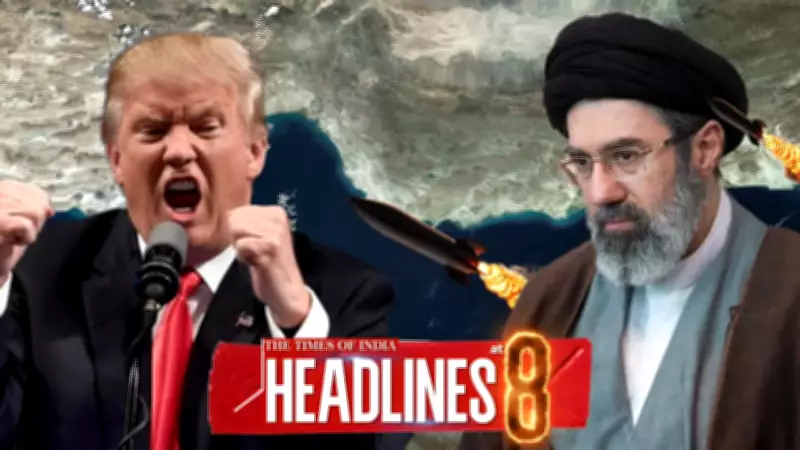
Iran Dictates Terms for Conflict Resolution with the United States
Efforts by former US President Donald Trump to de-escalate tensions with Iran are encountering significant resistance, as Tehran has laid out a stringent set of preconditions for any potential ceasefire agreement. The Iranian government is demanding a comprehensive US military pullback from the Gulf region, complete relief from international sanctions, and enhanced control over critical oil transit routes, notably the Strait of Hormuz.
Strict Preconditions for De-escalation
Iran's demands represent a firm stance in the ongoing conflict, emphasizing its strategic priorities in the region. The call for the closure of US bases in the Gulf aims to reduce American military presence, which Iran views as a threat to its sovereignty and regional influence. Simultaneously, the demand for lifting sanctions seeks to alleviate economic pressures that have severely impacted Iran's economy and global trade capabilities.
Control over the Strait of Hormuz is particularly crucial, as this narrow waterway is a vital chokepoint for global oil shipments, handling approximately one-fifth of the world's petroleum trade. Iran's insistence on greater authority here underscores its intent to leverage this strategic asset in negotiations, potentially affecting global energy markets and geopolitical dynamics.

Diplomatic Channels and Negotiation Dynamics
While publicly dismissing claims of active talks, Iran is reportedly exploring limited diplomatic avenues behind the scenes. Sources indicate a preference for engaging with JD Vance over other US negotiators, suggesting a strategic approach to dialogue that aligns with Iran's perceived interests. This quiet diplomacy occurs amidst a backdrop of strong rhetoric and mutual distrust, with both sides exchanging conflicting signals that complicate progress.
The situation remains highly tense, with no immediate breakthrough in sight. The combination of Iran's uncompromising demands and the complex political landscape in the US creates significant hurdles for any meaningful de-escalation. Observers note that the path forward is fraught with challenges, requiring careful navigation to avoid further escalation.
Implications for Regional and Global Stability
The standoff between Iran and the US has far-reaching implications, affecting not only bilateral relations but also regional security and global economic stability. The demands for US military withdrawal could reshape security architectures in the Gulf, while sanctions relief might alter Iran's economic trajectory and international standing.
Control over the Strait of Hormuz adds a layer of complexity, as any shift in authority could impact oil prices and supply chains worldwide. The ongoing tensions highlight the delicate balance of power in the Middle East and the intricate web of alliances and rivalries that define the region's geopolitics.
As both sides maintain their positions, the prospect of a swift resolution appears distant. The international community watches closely, aware that the outcome of this conflict could set precedents for future diplomatic engagements and conflict management in volatile regions.






