

Iranian Leader's Deep Affection for India Revealed at Emotional Lucknow Gathering
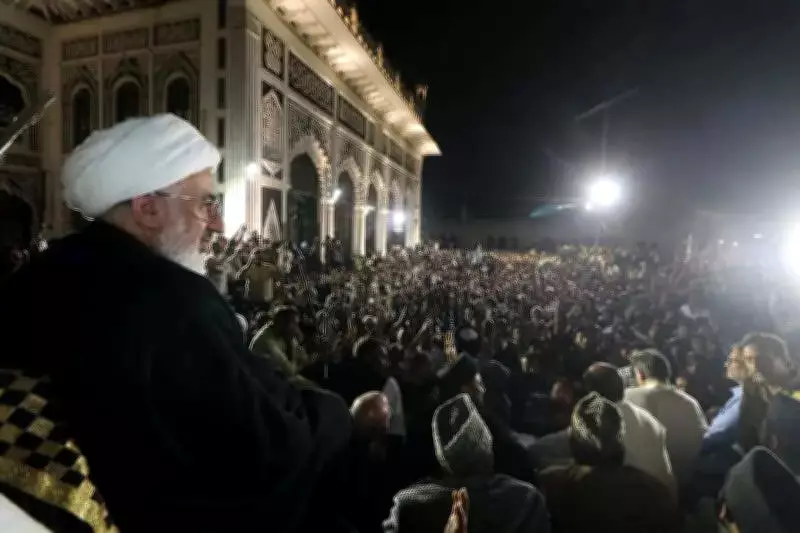
An atmosphere of profound grief and solemn reverence enveloped Lucknow's historic Chhota Imambara on Wednesday night. The occasion was a Majlis-e-Tarheem, a mourning assembly, addressed by Abdul Majid Hakeem Ilahi, the special representative of Iran's Supreme Leader in India. While the event was steeped in sorrow, the central, resonant theme of Ilahi's address was the late Ayatollah Ali Hosseini Khamenei's deep, enduring, and remarkably personal love for India and its diverse populace.
A Connection Beyond Symbolism: Intellectual Engagement with India
Speaking in Persian, with translations provided by local scholar Qamar Hasnain in Urdu, Ilahi emphasized that Khamenei's bond with India was far from superficial or merely diplomatic. "It was deeply personal and intellectual," Ilahi stated. He elaborated that the late leader actively followed the works of Indian scholars, read books authored by Indian writers, and maintained a keen awareness of the country's rich intellectual and spiritual traditions.
"He knew Indian scholars by name and would often refer to their work in his discourses," Ilahi revealed, underscoring the genuine depth of this engagement. The representative shared a personal reflection, admitting that for many years he had pondered the reason behind Khamenei's exceptional affection for India. "That question found its answer only after his passing," Ilahi told the hushed audience, a poignant pause emphasizing his words.

Cross-Community Mourning as Proof of a Genuine Bond
Ilahi pointed to the widespread, spontaneous outpouring of grief witnessed across India following Khamenei's death as the ultimate testament to this unique relationship. "I have seen it with my own eyes," he asserted. "Shia, Sunni, Hindu, Sikh, Christian—the sorrow was not confined to any single community. People from all walks of life and faiths expressed their grief, shed tears, and showed their heartfelt love." This shared, cross-religious emotional response, he argued, vividly revealed the authentic and powerful bond between the Iranian leader and the Indian people.
Describing India as a nation defined by its pursuit of justice, spirituality, and humanity, Ilahi suggested it was natural for its citizens to feel a connection to a global leader who championed dignity and strong moral values. His remarks visibly moved the packed gathering, with many attendees quietly weeping and others nodding in solemn agreement.
A Portrait of Leadership: Power Coupled with Profound Simplicity
Transitioning from Khamenei's international connections, Ilahi painted a compelling portrait of the leader's character, highlighting a life that masterfully combined immense authority with radical simplicity. He disclosed that despite occupying the highest office in Iran for decades, Ayatollah Khamenei never owned a personal home. Even his immediate family, including his four sons, continued to reside in rented accommodations.
"He wielded supreme authority, influence, and position, yet consciously chose a life of detachment from material wealth and comfort," Ilahi said, presenting this as a fundamental reflection of his integrity.
A Leader's Ultimate Priority: The Safety of His People
Ilahi narrated a particularly striking anecdote to illustrate Khamenei's profound sense of duty. When the leader was warned of specific threats to his life and advised to relocate his family to a secure bunker, he firmly refused. Instead, Khamenei posed a poignant counter-question, asking how protection could be guaranteed for the millions of ordinary Iranians, especially the impoverished who lacked proper shelter.
"How can I seek to save myself when my people remain unprotected and vulnerable?" Ilahi quoted the late Ayatollah as saying. This episode, according to Ilahi, was a definitive reflection of Khamenei's deep-seated responsibility and his identification with the common citizen. As the powerful address concluded, the hallowed halls of Chhota Imambara remained heavy with a palpable mix of emotion—grief for a loss, and reverence for a legacy that touched hearts far beyond Iran's borders.






