

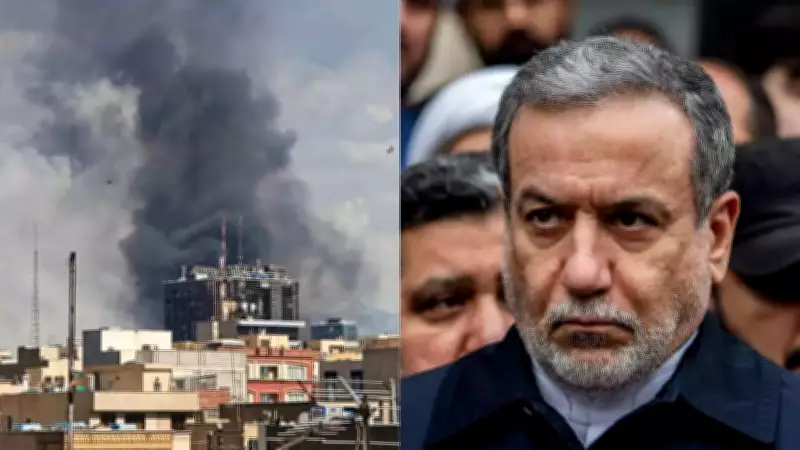
Iranian Foreign Minister Mocks US War Budget Request as 'Tip of the Iceberg'
Iranian Foreign Minister Abbas Araghchi has publicly mocked the Pentagon's demand for an additional $200 billion in budget for the ongoing conflict with Iran, stating that the amount represents only "the tip of the iceberg." In a pointed social media post, Araghchi suggested that ordinary Americans should direct their frustration toward Israeli Prime Minister Benjamin Netanyahu and what he termed "his lackeys in Congress" for imposing what he called a trillion-dollar "Israel First tax" on the US economy.
Escalating Rhetoric Amid Dangerous West Asia Conflict
The war in West Asia has taken a perilous turn with recent Iranian strikes causing extensive damage to Qatar's primary gas hub at Ras Laffan Industrial City. This development has sparked fresh concerns about global energy supplies as the Middle East conflict intensifies dramatically. State-run QatarEnergy reported that multiple waves of attacks triggered "sizeable fires" and inflicted significant damage to liquefied natural gas facilities, though authorities later confirmed the fires were contained and no injuries were reported.
Market Turmoil and Energy Supply Fears
The escalation comes amid tit-for-tat strikes involving Iran, Israel, and the United States, with former President Donald Trump issuing warnings to Tehran against further attacks. Oil prices surged more than 5 percent due to supply concerns, reflecting profound market anxiety over potential disruptions in a region that remains critical to global energy flows. The financial markets are clearly reacting to the heightened tensions and their potential impact on energy security worldwide.

Trump Clarifies Israel's Role in Gas Field Attack
Former US President Donald Trump stated late Wednesday that the strike on Iran's South Pars gas field was executed by Israel, emphasizing that neither the United States nor Qatar had any involvement in the operation. In a detailed social media post, Trump explained that Israel had targeted a section of the major gas facility "out of anger" over developments in the Middle East, stressing that Washington had no prior knowledge of the attack and that Qatar was "in no way" involved.
Warning Against Further Escalation
While cautioning that he did not want to authorize such large-scale destruction due to its long-term consequences, Trump made it clear that the United States would act decisively if Qatar's LNG assets were attacked again. The former president's statement underscores the delicate balance between military response and strategic restraint in the volatile region.
Araghchi's Scathing Critique of US Policy
In his social media commentary, Araghchi wrote: "We're only three weeks into this war of choice, imposed on both Iranians and Americans. This $200 billion is the tip of the iceberg. Ordinary Americans can thank Benjamin Netanyahu and his lackeys in Congress for the trillion-dollar 'Israel First tax' that's about to hit the US economy." The Iranian diplomat's remarks highlight the growing economic dimensions of the conflict and suggest that financial consequences could extend far beyond immediate military expenditures.
Regional Diplomacy Under Strain
The conflict has already strained regional diplomacy, with Qatar expelling Iranian military, security attachés, and staff following strikes on key energy facilities. These diplomatic expulsions signal deteriorating relations between regional powers and complicate efforts to de-escalate tensions through diplomatic channels.
The situation remains fluid and dangerous, with military actions, economic repercussions, and diplomatic maneuvers all contributing to an increasingly complex crisis that threatens to destabilize not only the Middle East but global energy markets and international relations more broadly.






