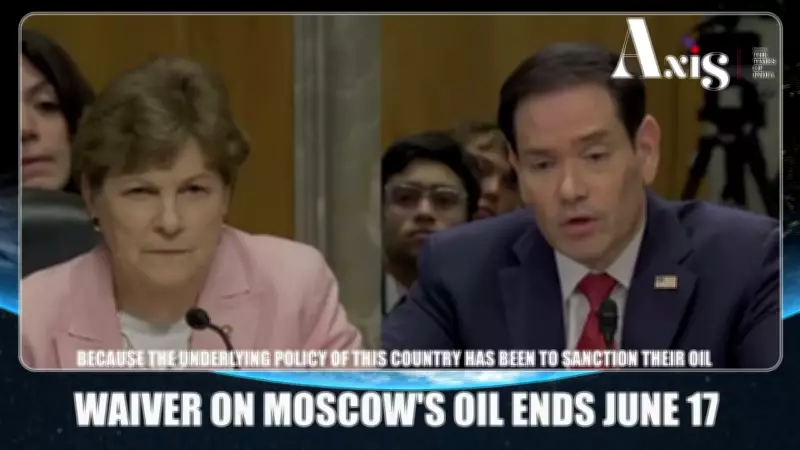
The United States has shifted its stance on India's purchase of Russian crude oil. For years, Washington tolerated India's acquisition of discounted Russian oil, as it helped stabilize global oil markets and prevent a price shock. However, with Russian oil waivers set to expire on June 17, US Secretary of State Marco Rubio has now demanded that India end these purchases as soon as possible.
Timing and Geopolitical Implications
The timing of this ultimatum is remarkable. On the same day, Venezuelan President Delcy Rodriguez arrived in India to deepen energy ties. This raises questions about whether America is trying to replace Russian barrels with Venezuelan crude. Is the Trump administration attempting to narrow India's energy options while offering alternatives under US influence? And most importantly, should Washington have any say in where India buys the oil that powers a 1.4-billion-strong economy?
Geopolitical Battle Over Russian Oil
This report breaks down the geopolitical battle over Russian oil, Venezuela's growing role, China's shadow in the energy game, and why India asserts that its energy policy will be decided only in New Delhi. The United States has long used sanctions as a tool to influence global energy flows, but India has consistently maintained its strategic autonomy in energy procurement.

India's dependence on imported oil makes energy security a critical national priority. The country has diversified its sources, including from Russia, Iraq, Saudi Arabia, and now Venezuela. The US demand to stop Russian oil purchases comes at a time when global oil prices remain volatile, and any disruption could impact India's economic growth.
Venezuela's Role
Venezuela's offer to supply oil to India is seen as a potential alternative to Russian crude. However, Venezuela's own oil industry is under US sanctions, and its production capacity is limited. This raises questions about the viability of Venezuelan oil as a replacement. Moreover, China has also been deepening its energy ties with Venezuela, adding another layer of complexity to the geopolitical chessboard.
India's response to Rubio's ultimatum will be closely watched. The Indian government has repeatedly stated that its energy policy is based on national interests and not external pressure. As the June 17 deadline approaches, the world will see whether India bends to US demands or continues to chart its own course in the global energy landscape.