

India's Oil Sourcing Strategy Firmly Anchored in National Interest and Diversification
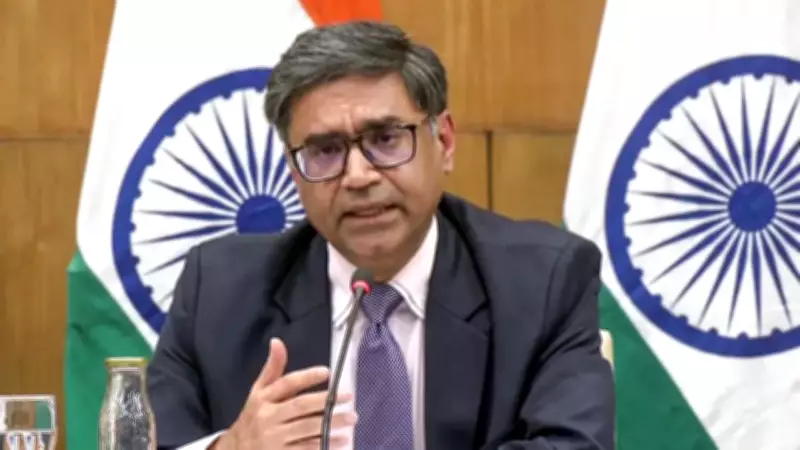
In a significant clarification on Monday, the Indian government asserted that the nation's oil sourcing strategy will be guided solely by national interest, with a clear policy of not depending on any single country for its energy needs. Foreign Secretary Vikram Misri emphasized that actual oil purchases are conducted by petroleum companies, with decisions intricately tied to market conditions, availability, pricing, and comprehensive risk assessments.
Clarification Amid US Executive Order and Political Scrutiny
The comments from Foreign Secretary Vikram Misri came just three days after US President Donald Trump's executive order, which lifted a 25% penal tariff on India, stated that India had committed to cease purchasing Russian oil, either directly or indirectly. This development had created suspense regarding India's official position on its already-declining Russian oil imports.
Amid this backdrop, Misri firmly stated that oil companies, whether public or private, will continue to make business choices driven by a complex matrix of considerations. These include critical financial and logistical aspects, ensuring that decisions are pragmatic and aligned with broader economic stability.

Government's Stance on Commitments and Opposition Accusations
Misri's response followed repeated remarks by Commerce and Industry Minister Piyush Goyal, who had indicated that only the foreign ministry could comment on whether India gave any specific commitment to the United States while negotiating the framework for an interim trade agreement. This clarification came in the wake of accusations from opposition parties that the government was evading direct questions on the matter.
At a media briefing focused on the visit of Seychelles President Patrick Herminie, Misri addressed these concerns head-on. He stated, "What I can firmly and confidently say is that whether it is the government or indeed our business, at the end of the day, national interests will be the guiding factor for us in our choices."
Detailed Analysis of Oil Import Trends and Diversification Efforts
Recent commerce department data reveals a nuanced picture of India's oil import landscape. In December, India's crude imports from Russia fell to a 10-month low of $2.7 billion, marking a 15% decline from December 2024. During the same period, Saudi Arabia and the United States emerged as significant gainers, with Saudi imports rising 60% to $1.8 billion and US imports increasing 31% to $569 million.
Despite this shift, Russia remained the largest source of crude oil for India during the April-December 2025 period, accounting for 31% of total imports. This represents a decrease from the previous year's figure of nearly 37.5%. Conversely, the United States saw its share jump from 4.5% to 7.8% during this timeframe, highlighting a deliberate diversification strategy.
Operational Framework of Oil Companies and Government Priorities
Misri elaborated on the operational framework guiding oil companies, noting, "They assess availability at any given point in time, and they assess risks, costs in this process. And obviously, all of these companies also have their own internal accountability-related processes to look at and certain fiduciary responsibilities in the market."
He underscored that the government's foremost priority is to safeguard the interests of Indian consumers, ensuring they receive adequate energy at the right price through reliable and secure supplies. This consumer-centric approach is fundamental to India's energy policy.
Strategic Emphasis on Diversification and Global Market Stability
Misri further emphasized India's strategic intent to maintain multiple sources of supply and diversify them appropriately to ensure stability. "I would say that the more diversified we are in this area, the more secure we are," he asserted, highlighting the importance of reducing dependency on any single nation.
He noted that India, along with many other countries, shares a common interest in ensuring stable prices and secure supplies, especially at a time when global uncertainties are significantly impacting the stability of energy markets worldwide.

India's Role as a Major Consumer and Stabilizing Force
Recognizing India's position as one of the largest global consumers of energy, Misri pointed out that the country also plays a crucial role in helping to stabilize global energy markets. "That's one reason we import energy from multiple sources... the key drivers of our energy policy are adequate availability, fair pricing, and reliability of supply," he explained.
Concluding his remarks, Misri reaffirmed, "We import crude oil from dozens of nations. We are neither dependent on any single source for this, nor do we intend to be." This statement solidifies India's commitment to a diversified, secure, and nationally interest-driven oil sourcing strategy, ensuring resilience in an unpredictable global energy landscape.





