The year 2025 marked a definitive hardening of India's national security posture under Prime Minister Narendra Modi. The nation's zero-tolerance doctrine against terrorism, particularly emanating from Pakistan, evolved from policy into an entrenched mindset. This shift was catalyzed by one of the darkest episodes in Kashmir's recent history, leading to a multi-pronged response that combined diplomatic, economic, and military might.
The Pahalgam Massacre: A Nation Shaken
On April 22, 2025, a serene spring morning in the Baisaran Valley of Pahalgam turned into a scene of horror. Pakistan-sponsored terrorists, belonging to a Lashkar-e-Taiba (LeT) proxy group, opened fire on civilians. The attack claimed 26 lives and left the region in trauma.
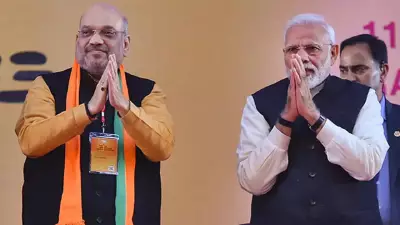
Eyewitness accounts revealed the attackers' brutal methods of identifying victims based on faith, checking for Aadhaar cards and even physical markers. The selective nature of the killings deviated from typical patterns, deepening the shock. The news triggered an immediate and high-level response. Union Home Minister Amit Shah rushed to the Valley, while Prime Minister Narendra Modi, on an official trip to Saudi Arabia, cut short his visit and returned to Delhi.

Global condemnation was swift. Leaders from the United States, Nepal, and elsewhere expressed solidarity. The attack coincided with the visit of US Vice President JD Vance, underscoring its international impact. Investigations quickly established the trail leading back to Pakistan and its proxy networks, confirming a familiar pattern of cross-border terrorism.
Diplomatic and Economic Retaliation: A Firm Message
India's response began the very next day, on April 23, with a series of unprecedented diplomatic and economic measures against Pakistan. Following a meeting of the Cabinet Committee on Security (CCS), the Ministry of External Affairs, led by Foreign Secretary Vikram Misri, announced decisive actions.
The key punitive steps included:
- Suspension of the Indus Waters Treaty: The 1960 treaty was put in abeyance, a move with severe implications for Pakistan's agriculture and water security.
- Closure of the Attari Integrated Check Post (ICP): The land border crossing was shut down.
- Cancellation of SAARC Visa Exemption Scheme (SVES) privileges: Pakistani nationals' visas were cancelled, and they were instructed to leave India within 48 hours.
- Expulsion of Defence Advisors: Pakistan's defence advisors in New Delhi were declared Persona Non Grata, with India reciprocally withdrawing its advisors from Islamabad.
- Reduction of High Commission Staff: Staff strength in both missions was slashed from 55 to 30.
These actions signaled a clear marginalization of Pakistan in India's diplomatic calculus, directly linking the consequences to its support for terrorism.
Operation Sindoor: A Military Red Line
The diplomatic offensive was followed by a precise military response. On the night of May 6-7, the Indian armed forces launched Operation Sindoor. This counter-terror operation targeted key terror infrastructure deep inside Pakistan and Pakistan-occupied Kashmir (PoK), marking the first time precision strikes extended into mainland Pakistan beyond PoK.
The operation struck nine high-value terror camps, including the Muridke base of LeT chief Hafiz Saeed and the Bahawalpur base of Jaish-e-Mohammed (JeM) chief Masood Azhar. India emphasized the strikes were focused solely on terrorist facilities, avoiding Pakistani military installations.
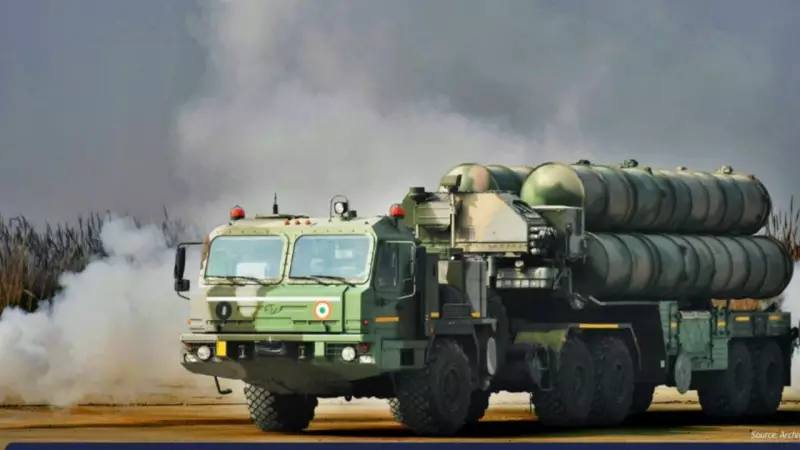
Pakistan attempted a retaliatory drone and missile barrage, which was successfully neutralized by India's integrated air defence system, Sudarshan Chakra. In response, India conducted further strikes targeting 11 Pakistani airbases, including Nur Khan and Jacobabad, reportedly destroying around 20% of Pakistan Air Force infrastructure. Military tensions eventually eased after a ceasefire agreement on May 10, though India maintains that Operation Sindoor is merely "paused."

Prime Minister Modi later framed it as India's new policy against terror, a battle of "Yuddha" from the land of "Buddha." IAF Chief Amar Preet Singh confirmed significant losses inflicted on Pakistan, including aircraft and an SAM system.
Sustained Counter-Terror Operations in Kashmir
Alongside the cross-border response, security forces intensified operations within Jammu and Kashmir. Operation Keller in Shopian's Keller forest in May led to the elimination of three LeT terrorists and recovery of a large arms cache. This was followed by the conclusive Operation Mahadev.
After a 12-day hunt based on precise intelligence, security forces neutralized the three LeT terrorists directly responsible for the Pahalgam massacre in an encounter in Dachigam forest near Srinagar on July 28. Home Minister Amit Shah announced this success in Parliament, stating that Operations Sindoor and Mahadev had delivered a clear message to the masterminds of terror.
The events of 2025, from the tragedy in Pahalgam to the far-reaching consequences of Operation Sindoor, redefined India's strategic playbook. They demonstrated a resolve to pursue terrorists and their backers relentlessly, combining immediate retaliation with sustained diplomatic and military pressure, thereby etching a new normal in the nation's security paradigm.