India's External Affairs Minister, Dr. S. Jaishankar, recently attended the funeral prayers for Bangladesh's former Prime Minister and opposition leader, Begum Khaleda Zia. This significant diplomatic gesture has been interpreted by foreign affairs experts as a clear signal of New Delhi's continued policy of balance and equanimity towards its important eastern neighbour.
A Diplomatic Gesture of Respect and Continuity
The visit, which took place on a recent Sunday, saw Dr. Jaishankar paying his respects at the funeral held at the Bangladesh National Mosque, Baitul Mukarram. The External Affairs Minister represented India at the solemn occasion, where Khaleda Zia was laid to rest beside her husband, former President Ziaur Rahman, in the capital's Chandrima Udyan. This move was closely watched in diplomatic circles, as it involved engaging with the leadership of the Bangladesh Nationalist Party (BNP), the principal opposition to the currently ruling Awami League government led by Prime Minister Sheikh Hasina.
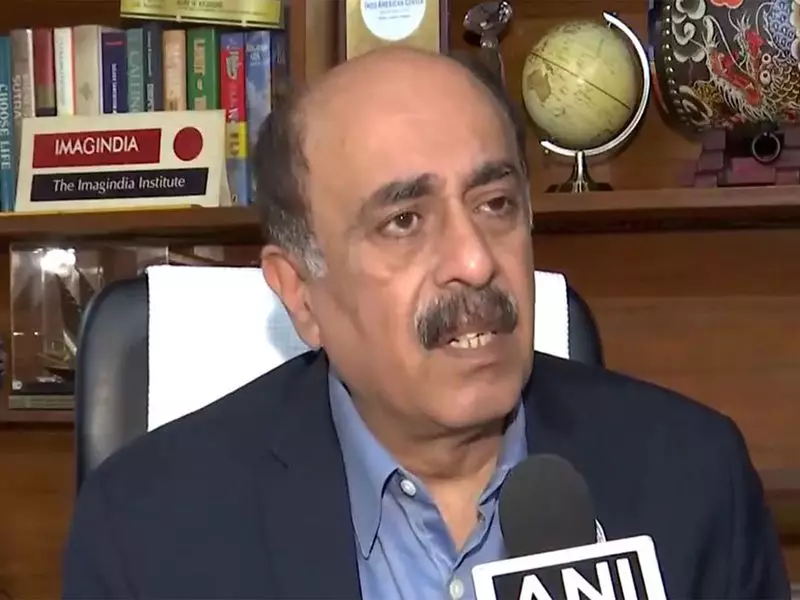
Foreign policy analysts were quick to note the importance of this gesture. They argue that by sending its top diplomat, India demonstrated a nuanced and mature approach, engaging with all major political stakeholders in Bangladesh. This action reinforces the view that India's foreign policy is not tied to any single political party in Dhaka but is instead focused on the enduring state-to-state and people-to-people relationship between the two nations.

Decoding the Message: Equanimity and Strategic Balance
Experts point out that this is not an isolated incident but part of a consistent pattern. They recall that India maintained a similar stance of balance during the recent national elections in Bangladesh. The decision to have the External Affairs Minister attend the funeral of a prominent opposition leader is seen as a continuation of that calibrated and equitable diplomacy.
The core message, according to observers, is one of stability and non-interference. India seeks to project itself as a reliable neighbour whose partnership transcends the domestic political dynamics of Bangladesh. This approach aims to safeguard India's multifaceted interests—spanning security, connectivity, trade, and cultural ties—regardless of which political party is in power in Dhaka. It underscores a long-term vision for the bilateral relationship, built on mutual respect and shared regional goals.
Implications for Bilateral Ties
The diplomatic move is expected to have positive reverberations. For the BNP and its supporters, the gesture is likely to be viewed as a mark of respect, potentially softening historical perceptions. For the Awami League government, with which India shares a deep and extensive partnership, it reaffirms that New Delhi's engagements are conducted with transparency and without hidden agendas.
Ultimately, Dr. Jaishankar's presence at Khaleda Zia's funeral serves as a powerful symbol of India's commitment to a balanced and forward-looking relationship with Bangladesh. It reinforces the principle that neighbourhood diplomacy, especially with a country as crucial as Bangladesh, requires consistency, respect for internal processes, and an unwavering focus on the broader strategic partnership that benefits the entire South Asian region. This act of diplomatic equanimity is poised to strengthen the foundation of India-Bangladesh ties in the years to come.