India's Defence Minister Issues Urgent 5-7 Year Deadline for 6th Generation Fighter Engine Development
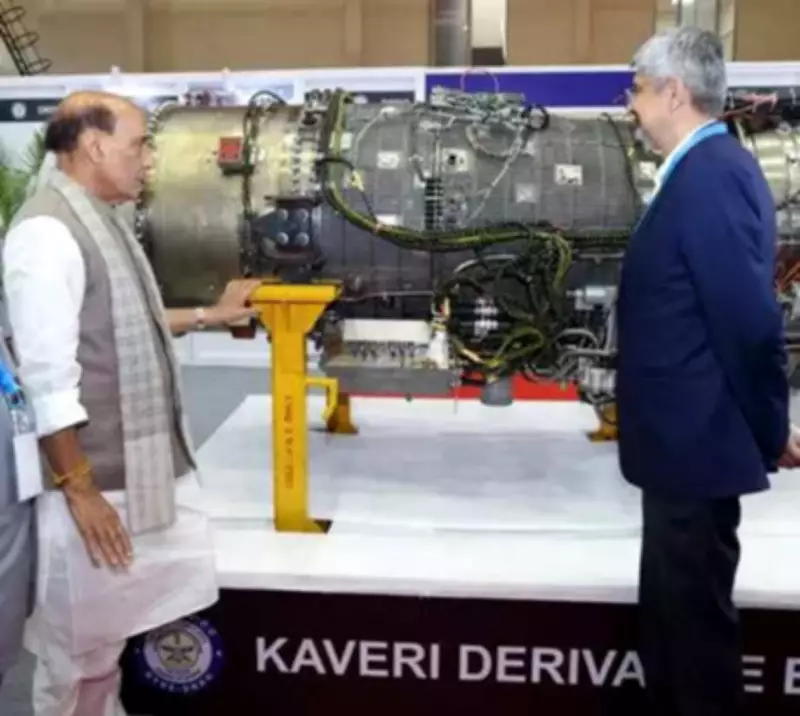
In a significant push for indigenous defence capabilities, Defence Minister Rajnath Singh has set an ambitious timeline of just 5-7 years for DRDO scientists to develop a 6th generation aero engine for advanced fighter aircraft. The minister delivered this directive during his visit to the Gas Turbine Research Establishment (GTRE) in Bengaluru on Monday, where he emphasized the critical strategic importance of this technological leap.
Compressing Decades of Development into Years
Rajnath Singh acknowledged the immense complexity of aero engine development, describing it as a sophisticated integration of thermodynamics, materials science, fluid mechanics, and advanced mechanical engineering. He noted that even technologically advanced nations typically require 25 to 30 years to develop next-generation engines.
"We must assume that 20 years have already passed and we now have only 5–7 years left," the minister declared, urging Indian scientists to dramatically compress development timelines in light of pressing strategic requirements. This sense of urgency reflects India's determination to achieve self-reliance in critical defence technologies.

Witnessing Indigenous Progress and Setting Future Goals
During his Bengaluru visit, the defence minister witnessed the full afterburner engine test of the Kaveri engine, a long-delayed indigenous project being developed for advanced fighter jets. This demonstration highlighted both progress and the challenges in India's aero engine development journey.
Rajnath Singh emphasized that India is rapidly advancing toward the design and development of the Advanced Medium Combat Aircraft (AMCA), making mastery of aero engine technology more crucial than ever. "We have made numerous attempts in the past to achieve expertise in the field of aero engines. Now, the time has come to complete those efforts," he stated.
Beyond 5th Generation: Embracing Next-Gen Technologies
The minister made it clear that India cannot limit itself to 5th generation engine technology alone. "We must begin the development of the 6th generation. Research on them is the need of the hour," he asserted, highlighting the increasing importance of artificial intelligence, machine learning, and new materials in next-generation engine development.
Rajnath Singh stressed that India must stay ahead of the technological curve, particularly as global supply chains undergo transformation. "Supply chains are breaking and new ecosystems are developing. Nations possessing indigenous critical technologies will remain safe, secure and sustain themselves," he explained, underscoring the connection between technological sovereignty and national security.
AMCA Project Advances with Industry Partnerships
The push for 6th generation engine development coincides with significant progress on the AMCA project. Three industrial consortia have reportedly been shortlisted for collaboration: Tata, L&T (partnering with BEL and Dynamatic Technologies), and Bharat Forge (with BEML and Data Patterns).
The final selected partner will work alongside the Aeronautical Development Agency (ADA) to build five AMCA prototypes by 2031, supported by an initial ministry allocation of Rs 15,000 crore. This substantial investment demonstrates the government's commitment to advancing India's indigenous fighter aircraft capabilities.
Strengthening International Collaborations
While emphasizing self-reliance, Rajnath Singh also welcomed joint studies with the United Kingdom and France under the National Aero Engine Mission framework. He noted that such international partnerships would help India better understand technological challenges while simultaneously building domestic capabilities.
The minister's Bengaluru visit included additional defence milestones, including the launch of the mountain fire control radar and the flagging off of the improved Akash weapon system from Bharat Electronics Ltd. These developments highlight the broader context of India's defence modernization efforts.

Looking Ahead: Strategic Partnerships and Manufacturing
On Tuesday, Defence Minister Rajnath Singh and French Minister of Defence Catherine Vautrin are scheduled to inaugurate Tata Advanced Systems' final assembly line for the Airbus H125 helicopter in Kolar. This event, part of the "India France Annual Bilateral Dialogue," underscores the continuing importance of strategic international partnerships even as India pursues greater technological independence.
Rajnath Singh described DRDO as the foundational pillar of India's strategic capability, emphasizing that achieving Aatmanirbharta (self-reliance) in aero engine technology represents a critical national priority. The 5-7 year deadline for 6th generation engine development marks a bold step toward realizing this vision of technological sovereignty in defence.