The year 2025 marked a period of significant diplomatic recalibration for India, characterized by a cautious rapprochement with China and navigating a relationship with the United States that experienced severe stress under the second administration of President Donald Trump.
A Cautious Thaw on the Eastern Front: India and China
India and China concluded 2025 on a note of guarded optimism, taking deliberate steps to restore ties after over four years of strain originating from the prolonged border standoff in eastern Ladakh. The foundation for this shift was laid in October 2024 with an agreement to disengage along the border, bringing a measure of calm to the frontier—a prerequisite India had set for rebuilding the relationship.
With stability returning to the border, diplomatic channels intensified. National Security Adviser Ajit Doval and Chinese Foreign Minister Wang Yi, serving as Special Representatives on the boundary issue, spearheaded efforts to steadily improve bilateral relations. During a visit to China in July, External Affairs Minister S. Jaishankar emphasized the need for both nations to build on the "positive momentum" in normalization, specifically to address lingering border concerns like de-escalation.

A pivotal moment came in August when Prime Minister Narendra Modi met Chinese President Xi Jinping in Tianjin. The context of looming tariff threats from the US under President Trump helped clarify a path forward. Both leaders reiterated that India and China were partners in development, not competitors, and agreed to manage differences without letting them escalate into disputes. They underscored that a stable relationship based on mutual respect and sensitivity was essential for their growth and for a multipolar world.
Prime Modi notably stated that "India and China both pursue strategic autonomy and their relations should not be seen through a third country lens," a clear reference to external pressures. The process saw tangible confidence-building measures:
- Resumption of Indian pilgrim visits to Kailash and Mansarovar in Tibet.
- Reciprocal easing of visa norms.
- Restoration of direct flight connectivity between multiple cities after a five-year hiatus.
Looking ahead, President Xi Jinping is expected to visit India in 2026 for the BRICS summit, a move anticipated to further accelerate normalization.
Persistent Challenges in the Sino-Indian Dynamic
Despite progress, significant hurdles remained. In May, during India's Operation Sindoor against terrorist infrastructure in Pakistan, China's overt military backing of Islamabad served as a stark reminder of a major irritant. India's Deputy Chief of Army Staff, Lt General Rahul R. Singh, alleged that China treated the conflict as a "live laboratory," employing strategies to support Pakistan against India—a claim Beijing did not directly rebut.
Another flashpoint occurred in November when Chinese immigration authorities at Shanghai airport detained Indian national Prema Thongdok from Arunachal Pradesh for nearly 18 hours, refusing to acknowledge her Indian passport. New Delhi lodged a strong protest, demanding assurances that its citizens would not be selectively targeted. China denied ill-treatment but reiterated its claim on Arunachal Pradesh, which India firmly rejected.
Trade also became a friction point. China restricted exports of critical rare-earth metals to India, affecting automobile and other manufacturing sectors. Although partial relief came later, the episode highlighted dependency risks. On the trade balance, while India's exports to China saw a 22% surge in the first half of FY 2025-26, the overall volume remained heavily skewed in Beijing's favour, with Chinese exports to India touching USD 70 billion in the first six months of the year.
Rollercoaster Ride: India-US Relations Under Trump 2.0
The India-US relationship in 2025 was defined by sharp fluctuations. Punitive tariffs, fallout from the India-Pakistan conflict, and stringent US immigration policies placed unprecedented strain on the partnership.

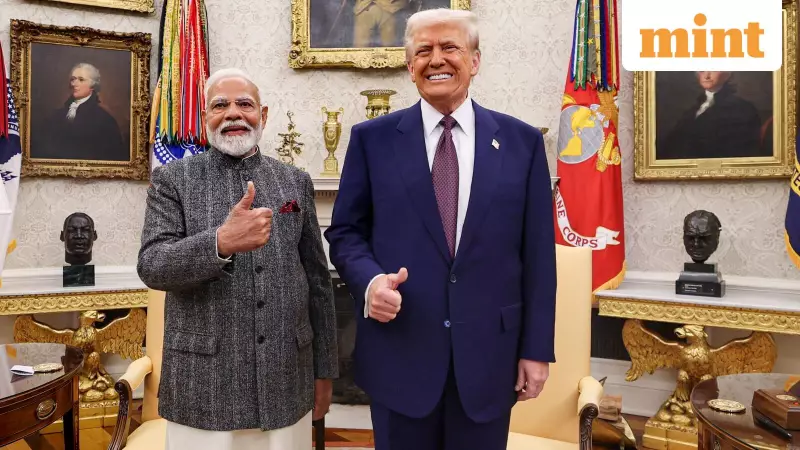
The year began positively with Prime Minister Modi's visit to Washington in February, marking his first bilateral engagement with the newly re-inaugurated President Trump. The meeting underscored the strategic partnership's strength. However, momentum quickly dissipated as trade disputes took centre stage. President Trump repeatedly criticized India as a "very high tariff nation," and on April 2, he imposed a 26% "discounted reciprocal tariff" on Indian goods.
Tensions escalated during and after Operation Sindoor in April-May. On May 10, Trump abruptly claimed on social media that the US had brokered a ceasefire—an assertion he repeated over 70 times. New Delhi firmly clarified that at no point was there any discussion on US mediation or linking it to a trade deal, as stated by Foreign Secretary Vikram Misri.
By August, Trump's criticism extended to India's purchase of Russian oil, leading to an additional 25% levy, bringing total US tariffs on Indian imports to 50%. The Trump administration also tightened immigration, introducing a controversial USD 100,000 fee on new H-1B visas, causing alarm among Indian professionals.
Islands of Cooperation Amidst the Turbulence
Despite the friction, areas of robust cooperation endured. Highlighting strong counter-terrorism ties, the US extradited Tahawwur Hussain Rana to India for his role in the 2008 Mumbai attacks and designated The Resistance Front as a Foreign Terrorist Organisation.
A key strategic milestone was reached in October with the signing of a 10-year defence framework agreement. This pact, inked by Defence Minister Rajnath Singh and US Secretary of War Pete Hegseth, signaled a commitment to deepen the major defence partnership and promote a free and open Indo-Pacific.
Conversations between Modi and Trump continued, underlining the relationship's enduring strategic importance. Modi described a later phone call as "very warm and engaging," and Trump has indicated a potential visit to India in the coming year, reflecting a bipartisan consensus in Washington on the value of strong ties with New Delhi.
As the curtain fell on 2025, India's diplomatic manoeuvring showcased its pursuit of strategic autonomy, mending fences where possible with China while striving to stabilize an indispensable yet tumultuous partnership with the United States.