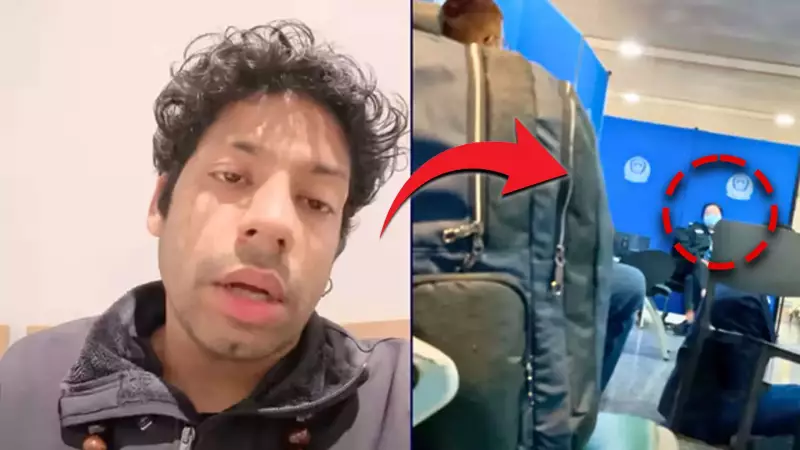
An Indian travel vlogger faced a harrowing 15-hour detention in China after authorities took strong objection to his remarks about the status of Arunachal Pradesh. The incident involving YouTuber Anant Mittal underscores the severe geopolitical tensions that can directly impact ordinary travelers.
The Detention at Immigration
The trouble began when Anant Mittal, known for his travel content, was undergoing immigration checks in China. According to his account, officials detained him after he referred to Arunachal Pradesh as part of India. Beijing, which claims the northeastern Indian state as part of its territory under the name 'Zangnan', maintains a zero-tolerance policy towards any narrative contradicting its claims.
Mittal's detention lasted for 15 hours, during which he was subjected to intense questioning. Reports indicate that the scrutiny extended beyond passport checks to include the seizure and examination of his electronic devices. This move highlights the extent to which Chinese authorities monitor and control discourse on sensitive territorial issues, even within personal travelogues.

Geopolitics Intrudes on Travel
This case is not an isolated bureaucratic hurdle but a stark example of how high-stakes diplomacy and nationalistic posturing can intrude into the personal journeys of individuals. For Indians traveling in China, conversations or digital content related to Arunachal Pradesh, Tibet, or Taiwan carry significant risk.
The incident, which occurred and was reported on December 24, 2025, serves as a cautionary tale. It demonstrates Beijing's unwavering commitment to enforcing its territorial claims globally, using all tools at its disposal—from border patrols to immigration counters.
Broader Implications for Travelers
The detention of Anant Mittal sends a clear message about the perils Indians may face while in China. The risks go beyond official statements and enter the realm of personal safety and freedom. Travel vloggers and social media influencers, whose content is publicly accessible, are particularly vulnerable.
This event forces a reevaluation of travel advisories and personal caution for Indian citizens visiting China. It emphasizes the need for heightened awareness of local sensitivities and laws, which are deeply intertwined with the Chinese state's political objectives. The zero-tolerance approach cited in the incident leaves little room for error or unintended offense.
Ultimately, Mittal's ordeal is a microcosm of the larger, ongoing dispute between two Asian giants. It proves that in today's connected world, a simple comment made online or at a border can have immediate and serious real-world consequences, transforming a tourist into a geopolitical pawn.