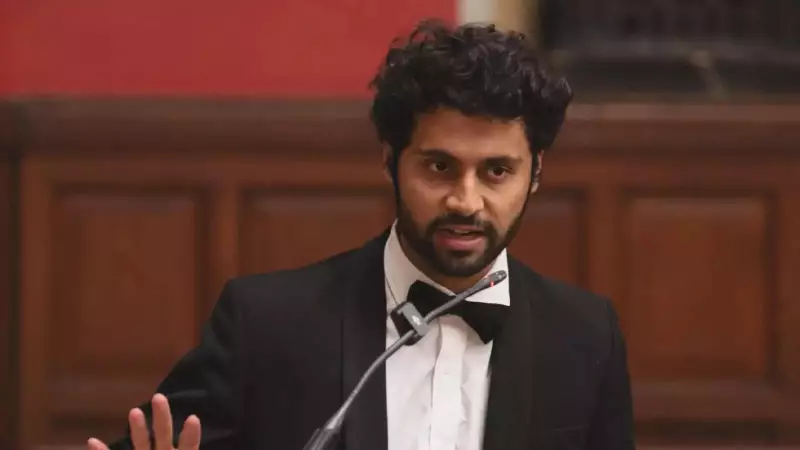
An Indian doctoral student at the University of Oxford delivered a powerful rebuttal to Pakistani accusations against India, turning the spotlight on minority rights and the nature of democracy in the subcontinent. The incident took place in the historic debating chamber of the Oxford Union, where Devarchan Banerjee, a DPhil scholar, engaged in a spirited exchange.
Flipping the Narrative at Oxford Union
During a debate where speakers from Pakistan levelled charges of populism against India, Devarchan Banerjee chose to respond with a fact-based historical argument. He addressed the audience directly, dismantling the criticisms point by point. Banerjee emphasized that India's responses to major terrorist attacks, including the incidents in Mumbai on 26/11, Uri, and Pulwama, were conducted within the framework of international law and through its democratic institutions.
He drew a sharp contrast with Pakistan's internal structure, pointing to the dominant role of its military in state affairs. The core of his argument focused on the treatment of religious minorities. Banerjee challenged the Pakistani narrative with a piercing question that resonated through the hall: "Can you elect a non-Muslim?" This query was aimed at the fundamental difference in the constitutional and social realities of the two nations.

Applause and Discomfort: A Reaction to Hard Facts
The Indian scholar's assertion that minorities in India have a better life and more rights than their counterparts in Pakistan generated a mixed reaction from the gathered audience. His statements were met with both applause and visible discomfort, highlighting the contentious nature of the topic. Banerjee's presentation was rooted in a comparison of the two countries' records on religious inclusion and exclusion.
The debate clip, which was uploaded on December 18, 2025, quickly gained traction online. It has amassed thousands of views on social media platforms, reigniting a longstanding discussion about which nation in South Asia genuinely protects its minority communities. The video has sparked fresh dialogue among netizens and analysts about the state of democracy and secularism in the region.
Reigniting a Subcontinental Debate
The viral moment from the Oxford Union has pushed the issue of minority rights back into the spotlight. Banerjee's arguments have provided a new reference point for those analyzing the political and social trajectories of India and Pakistan. By using the platform of one of the world's most prestigious debating societies, the scholar ensured his counter-narrative reached a global audience.
The incident underscores the ongoing intellectual and diplomatic tussle between the two neighbours, where historical grievances and contemporary policies are constantly weighed. The question posed by the Indian student remains a potent one, challenging observers to look beyond rhetoric and examine the ground realities of political participation and religious freedom in Pakistan.