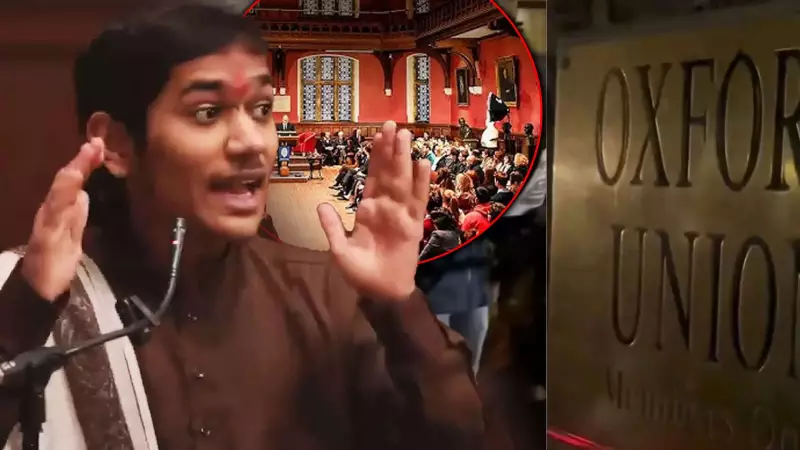
An Indian student delivered a powerful and pointed rebuttal to Pakistan's narrative on Kashmir during a prestigious debate at the University of Oxford, drawing global attention for his sharp historical and military critique.
Scathing Critique at a Global Forum
During a session at the famed Oxford Union on December 22, 2025, Indian student Kautilya Pandit directly challenged Pakistan's position on the demography of Kashmir. He forcefully countered Pakistani claims by bringing up the tragic exodus of the Kashmiri Pandit community from the region.
Pandit argued that this forced migration had effectively erased thousands of years of rich history and cultural heritage from the Kashmir Valley. His remarks put a spotlight on what many consider a grave humanitarian tragedy often overlooked in international discourse.

Direct Rebuke and Historical Reminders
Addressing the Pakistani delegation and narrative directly, Pandit employed the adage, "You reap what you sow." He then proceeded to question the nation's military credibility by invoking a pivotal moment in South Asian history.
He recalled the surrender of 93,000 Pakistani soldiers in the 1971 war, stating pointedly, "that is your military might." This historical reference served as a stark reminder of a decisive conflict that led to the creation of Bangladesh.
Mocking Military Decorations
Pandit also took aim at the Pakistani military's leadership, specifically mentioning Army Chief General Asim Munir. He quipped that Pakistan is "the only country where generals lose and get more medals," a sardonic comment on the practice of awarding military honors.
This part of his speech, along with the other pointed criticisms, resonated widely. The video clips and details of his address spread rapidly across social media platforms, attracting significant global attention.
Viral Impact and Global Reaction
The student's unflinching criticism publicly highlighted several historical and military setbacks for Pakistan on an international stage. The debate performance was noted for its factual rigor and rhetorical force, making it a topic of widespread discussion in diplomatic and academic circles.
By framing the Kashmir issue around the plight of the Kashmiri Pandits and challenging Pakistan's strategic competence, Pandit's arguments presented a counter-narrative that has gained substantial traction online and in media analyses following the event.