

Indian Sailors Face Dual Ordeal: Captivity and Conflict in Iran
In a dramatic sequence of events that reads like a thriller, eight Indian sailors experienced the unimaginable—first being held captive by Iranian authorities, then finding themselves trapped in an active war zone just as they were about to return home. Their harrowing journey from detention to danger unfolded in Bandar Abbas, Iran, where missile strikes and explosions became their daily reality.
The Initial Capture: A Peaceful Voyage Turns Hostile
The ordeal began on December 8 when the merchant vessel MT Valiant Roar, carrying 18 crew members including 16 Indians, one Sri Lankan, and one Bangladeshi, was intercepted in international waters while en route to Khor Fakkan in the UAE. According to Captain Vijay Kumar (45) from Meerut, the ship was moving slowly at just two to three knots when the Iranian Navy initiated heavy firing.
"They fired at least 500 rounds before boarding the vessel," Kumar recounted after safely returning to his family. Minutes before the capture, he had sent a desperate voice note to his cousin, another merchant navy officer, warning that they were being chased and likely to be captured soon.

The armed Iranian personnel detained the crew on suspicion of smuggling oil, despite the vessel having valid documentation. Some sailors were transferred to a prison in Bandar Abbas, while others remained confined aboard the ship. Communication was severely restricted, and basic movements required permission.
"We were treated like hostages without any explanation whatsoever," Kumar told reporters, highlighting the confusion and fear that permeated their captivity.
Diplomatic Efforts and Temporary Freedom
After weeks of intense diplomatic intervention, the crew began to be released in phases throughout February. By February 27, all 18 members had officially been freed and were preparing to leave Iran the following day. However, their relief was short-lived as war suddenly erupted in the region.
The sailors—some moved to a hotel by Indian embassy officials, others still stuck on the vessel—found themselves in a live conflict zone. The ship, docked beside Iranian naval assets, became a potential target, adding another layer of danger to their precarious situation.
"It was a complete war zone. Even after the release order, we couldn't leave the vessel. There was no way to reach us," Kumar recalled, describing the sudden shift from hope to horror.
Evacuation and Shelter in a War-Torn City
On March 3, an unexpected rescue arrived when an Iranian man lent a boat, allowing officials to evacuate those stranded on the Valiant Roar. The group reunited at a hotel in Bandar Abbas where other sailors had been staying. But safety remained elusive as the conflict intensified around them.
Within a day, the war came literally to their doorstep. Third engineer Ketan Mehta (27), whose parents live in Ghaziabad, described the terrifying moment: "Just a day after we had checked in, we saw a missile strike the naval base at Bandar Abbas. Everything turned to ashes in front of us. The visuals were traumatizing."
The hotel became their uncertain sanctuary as daily strikes shook the building. The men would rush from the sixth floor to the lobby whenever explosions occurred, fearing the next missile might hit directly. Sleep was rare, with sudden explosions serving as the only warning.
"There were no sirens, no clear warnings, only sudden explosions. The locals seemed used to it. But for us, every moment felt uncertain," Kumar explained, capturing the constant anxiety that defined their days.
The Perilous Journey to Safety
With limited phone access, the sailors rationed communication with their families, using a single phone with minimal balance to relay messages through a chain of contacts. They followed fragmented news on Iranian TV channels, trying to understand the conflict in a local language while hoping for an exit strategy.
By March 20, with no safe house available and increasing danger at the hotel, the sailors made a critical decision: to leave by road despite the risks. "The decision was stark—stay in a vulnerable hotel or risk crossing a country at war. It was do or die. All of us chose to move," Kumar stated.

A van was arranged at a steep cost of $2,400 (approximately Rs 2.3 lakh), with families back home transferring money through embassy channels to pay the drivers. What followed was a grueling 2,000-kilometer journey through silent highways and deserted towns.
Mehta described the surreal experience: "There were no people, no traffic, just emptiness all around us. And then suddenly, a series of explosions." From the road, they witnessed missile strikes hitting distant buildings, with shockwaves rattling their vehicle at times.
The drivers remained unfazed, pressing forward despite the danger. "We asked them not to stop under any circumstances. They told us those who survive are lucky," Kumar recalled, highlighting the grim reality of their escape.
Border Crossing and Final Return Home
Near Tabriz, about 60 kilometers from the border, the sailors witnessed another devastating strike. "We saw a barrage of missiles hit an entire city. We felt the impact even from the highway," Kumar said, emphasizing the scale of destruction they encountered.
They reached the Iran-Armenia border by March 24, but clearance took nearly three days. During this period, they stayed in Jalfa alongside other refugees fleeing the war-ravaged country. "There were many like us—Indians and other nationals trying to get out," Mehta noted, revealing the broader humanitarian crisis.
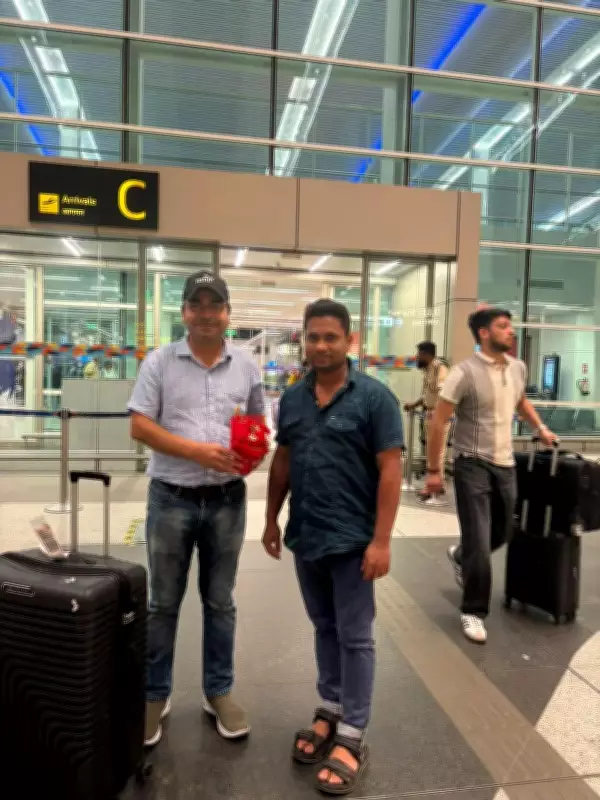
Finally, on March 27, they crossed into Armenia and reached the capital, Yerevan. A day later, they flew to Dubai, and on March 29, they landed in Mumbai, ending their nearly four-month ordeal.
Reflections and Unanswered Questions
Back home, relief has begun to replace concern, yet the traumatic memories linger. For Mehta, the priority is clear: "It's too early to think about going back. For now, we just want to be with our families."
Kumar, however, remains haunted by one unresolved question: "We still don't know why we were captured. But we know one thing—we were lucky to survive." Their story stands as a testament to human resilience amid geopolitical conflicts and the unpredictable dangers faced by maritime workers in volatile regions.
The sailors' experience underscores several critical issues:
- The vulnerability of international shipping crews in conflict zones
- The challenges of diplomatic intervention during escalating tensions
- The psychological impact of prolonged captivity followed by combat exposure
- The complex logistics of evacuating civilians from active war areas
As they recover with their families, these sailors carry not just personal trauma but also important lessons about international maritime security and the human cost of regional conflicts that often remain distant headlines for most people.





