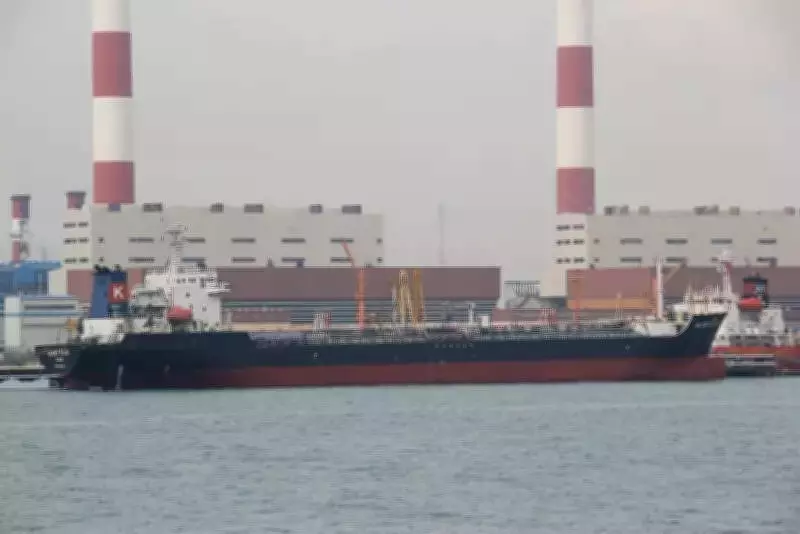
India Intercepts Three US-Sanctioned Iranian Tankers in Unprecedented Maritime Action
In a significant maritime enforcement operation, Indian coastal authorities have reportedly seized three tanker ships that were under United States sanctions due to their connections with Iran. According to a source who spoke to The Times of India on Monday, this action occurred earlier this month, marking a notable step in India's efforts to combat illicit oil trade.
Seizure Details and Timing With Bilateral Trade Framework
The vessels identified as Stellar Ruby, Asphalt Star, and Al Jafzia were intercepted on February 6, approximately 100 nautical miles west of Mumbai. Indian authorities detected suspicious activity involving a tanker within India's exclusive economic zone, leading to the seizure. This enforcement action coincided with the unveiling of a major bilateral trade framework between Washington and New Delhi, highlighting improved diplomatic and economic relations.
Notably, the Indian coastal authorities posted about the interception on social media platform X on February 6, but the post was later deleted. The three tankers were part of a so-called "shadow fleet" frequently changing their identities to evade detection by coastal states, with their owners based overseas.

Connections to Iranian Oil and Designated Individuals
According to the Foundation for Defense of Democracies (FDD), a Washington DC-based research institute, all three vessels had previously been sanctioned by the US for their ties to Iran. They are managed by Jugwinder Singh Brar, a UAE-based Indian national designated by the US Treasury Department in April 2025 for operating in Iran's petroleum sector. The Stellar Ruby was reportedly still flying an Iranian flag at the time of seizure, underscoring its direct links to Iran.
Context of US-India Relations and Regional Dynamics
This seizure follows recent improvements in India-US relations, with Washington announcing a reduction in import tariffs on Indian goods from 50% to 18%. In a related development, US military forces boarded another sanctioned tanker, Veronica III, in the Indian Ocean after tracking it from the Caribbean Sea. The Pentagon stated this action was part of efforts to target illicit oil trade connected to Venezuela, which has faced US sanctions for years.
Venezuela has relied on a shadow fleet of falsely flagged tankers to smuggle crude oil into global supply chains. In December, former President Donald Trump ordered a quarantine of sanctioned tankers to pressure then-President Nicolás Maduro, who was apprehended in January during an American military operation. Several tankers fled the Venezuelan coast following the raid, including the Veronica III, which was boarded by US forces conducting a right-of-visit and maritime interdiction.
Ongoing Regional Tensions and Human Impact
This incident adds to regional tensions, as Iran had previously seized an oil tanker, MT Valiant Roar, on December 8 with 16 Indian crew members on board. While eight have been released, eight remain in Iran's custody, with their families demanding the sailors' release. The dual actions by India and the US highlight the complex interplay of maritime security, sanctions enforcement, and diplomatic relations in the Indian Ocean region.
The Pentagon emphasized the tracking and shutdown of the Veronica III, stating, "The vessel tried to defy President Trump's quarantine — hoping to slip away. We tracked it from the Caribbean to the Indian Ocean, closed the distance and shut it down." This underscores the global reach of efforts to curb sanctioned oil trade, with India's seizure of Iranian-linked tankers representing a pivotal moment in its maritime policy and international cooperation.