

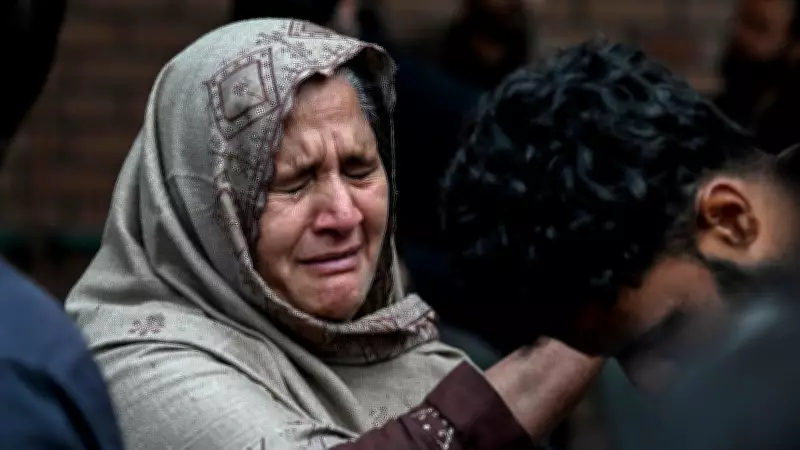
India Firmly Rejects Pakistan's Allegations Over Deadly Islamabad Mosque Blast
India has issued a strong rebuttal to Pakistan's claims attempting to link New Delhi to the devastating suicide bombing at a Shiite mosque in Islamabad that resulted in significant casualties. The Ministry of External Affairs released an official statement categorically rejecting what it termed as "baseless" and "pointless" allegations from Pakistani officials.
Official Statement Condemns Blast While Rejecting Allegations
The Ministry of External Affairs expressed condolences for the loss of life in the tragic incident while simultaneously dismissing Pakistan's accusations. "India rejects any and every such allegation, which is as baseless as it is pointless," stated the ministry in its official communication.
The powerful explosion occurred at the Khadijah al-Kubra mosque-cum-imambargah in Islamabad's Tarlai area during Friday prayers, resulting in at least 31 fatalities and 169 injuries according to police reports. The ministry condemned the bombing while criticizing Pakistan's response to the tragedy.

Pakistan's Unsubstantiated Claims
Pakistan's Defence Minister Khawaja Asif had earlier alleged, without presenting evidence, that India and Afghanistan were connected to the terrorist attack. In social media posts, Asif claimed that investigations revealed the attacker had traveled to and from Afghanistan, suggesting "collusion between India and Afghanistan."
India's response highlighted what it described as Pakistan's pattern of deflecting responsibility for internal security challenges. "It is unfortunate that, instead of seriously addressing the problems plaguing its social fabric, Pakistan should choose to delude itself by blaming others for its home-grown ills," the ministry's statement emphasized.
Afghanistan Also Rejects Pakistan's Allegations
Kabul has similarly dismissed Pakistan's claims regarding the Islamabad mosque attack. Taliban Defence Ministry spokesman Enayatullah Khwarazmi characterized the allegations as premature and lacking evidentiary support, according to reports from Khaama Press News Agency.
Khwarazmi noted that Pakistani officials have repeatedly blamed Afghanistan for security incidents without providing credible proof, including previous attacks in Balochistan. He questioned how Pakistani authorities could quickly identify alleged external links after attacks while failing to prevent them, suggesting such accusations cannot mask Pakistan's internal security challenges.
The Afghan spokesman stressed that Afghanistan's authorities do not support attacks on civilians and consider violence against innocent people unacceptable under Islamic and humanitarian principles. He urged Pakistani officials to focus on constructive regional cooperation and improving relations with neighboring countries rather than shifting responsibility.
Regional Implications and Security Concerns
The exchange highlights ongoing tensions between the neighboring nations and raises questions about regional security cooperation. The incident comes amid broader concerns about terrorism in the region and the challenges of cross-border security coordination.
India's firm rejection of Pakistan's allegations underscores the diplomatic strain between the two countries, while Afghanistan's similar response suggests a broader regional dynamic at play. The tragic loss of life in the mosque bombing has become entangled in geopolitical accusations that multiple nations have now rejected as unfounded.






