

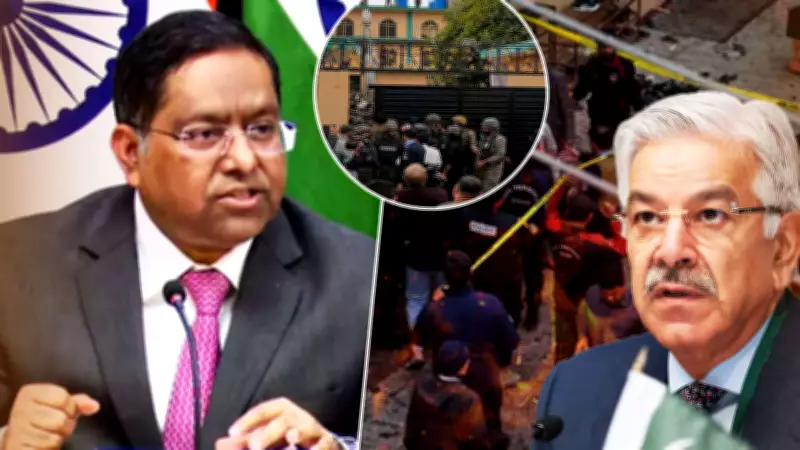
Islamabad Mosque Blast Ignites Regional Blame Game as India Issues Sharp Rebuttal
A devastating suicide bombing inside a mosque in Pakistan's capital, Islamabad, has reignited a familiar and contentious regional blame game, drawing sharp responses from neighboring countries. Instead of immediately addressing the internal security lapses that allowed such an attack to occur, Pakistan's leadership swiftly pointed fingers at India and Afghanistan, alleging external involvement. This move has been met with strong condemnation and rejection from both nations, highlighting ongoing tensions in the region.
India's Firm Rejection and Call for Accountability
India responded to Pakistan's allegations with a sharp and unequivocal rebuttal, condemning the attack while firmly rejecting the accusations as pointless and misleading. The Ministry of External Affairs emphasized that Pakistan must confront its "home-grown ills" rather than deflect responsibility onto others. In a statement, officials urged Pakistan to focus on addressing its internal security breakdown, which they argue has repeatedly led to such tragic incidents. This response underscores India's stance that external blaming only serves to obscure deeper issues within Pakistan's governance and security apparatus.
Afghanistan Echoes Criticism and Calls for Evidence
Kabul echoed India's sentiments, labeling Pakistan's accusations as irresponsible and unsupported by concrete evidence. Afghan officials called for a more constructive approach, suggesting that Pakistan should collaborate regionally to combat terrorism rather than engage in unfounded blame. This alignment between India and Afghanistan adds pressure on Pakistan to reassess its strategy and prioritize internal reforms over external scapegoating.

Human Toll and Analytical Warnings
As hospitals in Islamabad struggled to cope with the influx of injured victims and families mourned the dead, the human cost of the blast became starkly evident. Analysts and security experts warned that Pakistan's repeated tendency to blame external actors for such attacks only masks its own internal security failures. They argue that this pattern not only erodes Pakistan's credibility on the global stage but also hinders effective counter-terrorism efforts. Key points highlighted by observers include:
- The need for Pakistan to invest in robust intelligence and policing mechanisms.
- The risk of further isolating Pakistan internationally if blame games persist.
- The importance of regional cooperation to address shared security threats.
In summary, the Islamabad mosque blast has exposed deep-seated issues in Pakistan's security framework, with India and Afghanistan urging a shift from blame to accountability. As the region grapples with the aftermath, the focus remains on whether Pakistan will heed these calls and address its home-grown challenges to prevent future tragedies.






